Start with the object, then name the sight
Asteroids and comets are small bodies that travel through space, usually in orbits around the Sun. A meteor is different: it is the streak of light produced when a piece of space debris enters Earth’s atmosphere. The piece itself is called a meteoroid while it is in space. If any of it survives the journey and reaches the ground, that surviving material is a meteorite.
These names describe different things, not simply different sizes. A fragment shed by a comet can become a meteoroid, make a meteor in our sky and, if it survives, become a meteorite. An asteroid collision can also produce smaller fragments. Keeping the object separate from the light it makes is the simplest way to untangle the vocabulary.
Asteroids: bodies that can look like stars
Asteroids are generally rocky or metal-rich bodies, though their compositions vary. Many orbit in the region between Mars and Jupiter, while others follow paths that bring them closer to Earth’s orbit. They shine by reflecting sunlight rather than making their own visible light.
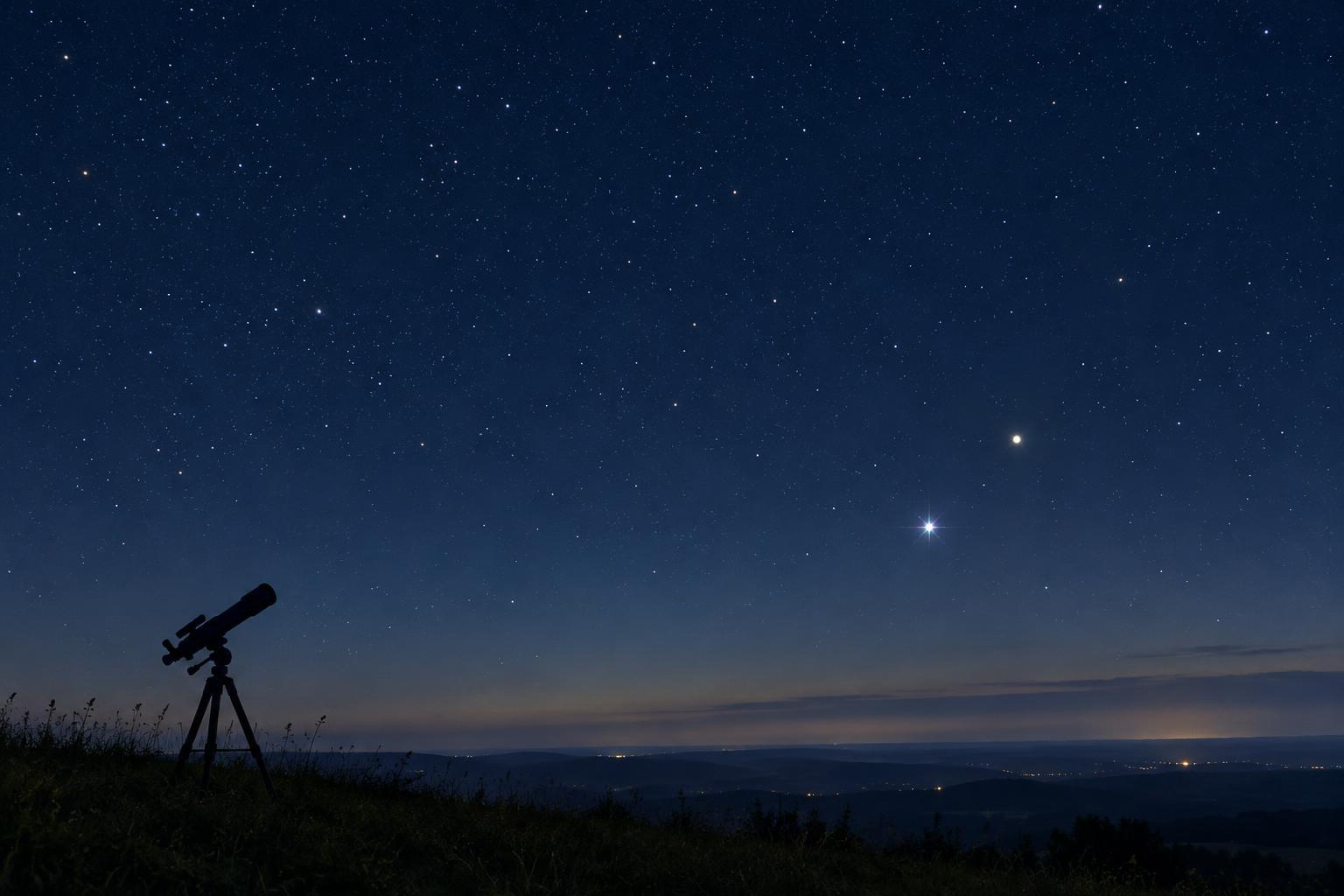
Through a small telescope, an asteroid usually looks like a point of light, much like a star. The useful clue is motion against the background stars: its position may change when compared across carefully recorded observations. That does not mean a casual glance will reveal it moving. Most asteroids are too faint to spot without equipment, and a single point of light in the sky is not enough to identify one.
Comets: changing visitors with occasional tails
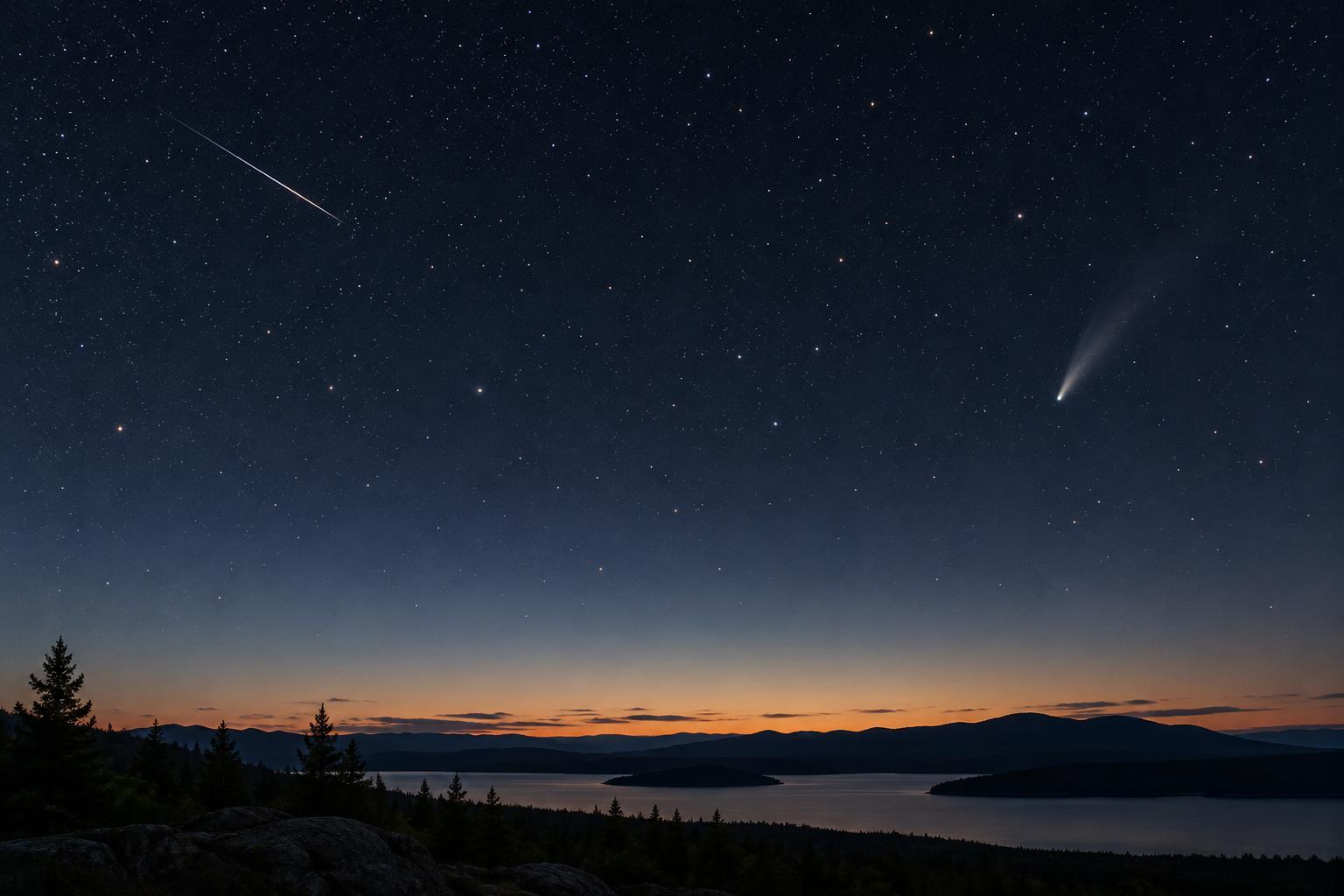
Comets contain ice along with dust and rocky material. As a comet approaches the Sun, warming can release gas and dust, surrounding its nucleus with a diffuse cloud called a coma. Sometimes that material forms visible tails. A dust tail and a tail of electrically charged gas can point in somewhat different directions, but both are shaped by the Sun’s influence rather than streaming behind the comet simply because it is moving forward.
To an observer, a comet may appear as a faint fuzzy patch, perhaps with a tail under favorable conditions. It may also be too dim to see unaided, or look nearly star-like through modest equipment. Its appearance changes as its activity and viewing geometry change. A tail is therefore a helpful clue when visible, not a feature every comet displays clearly at every moment.
Meteors: brief light in Earth’s atmosphere
A meteor typically appears as a quick streak across part of the sky. The incoming meteoroid moves rapidly through the atmosphere; interactions with the air heat the surrounding gas and wear away the object, producing the light we see. The glow occurs high above the ground. An especially bright meteor is often called a fireball, and a luminous trail can sometimes linger after the initial flash.
Meteor showers happen when Earth crosses a spread of debris along its orbit. Many such debris streams are associated with comets, although the meteors are not the comet itself flying past overhead. Shower meteors appear to fan out from a region of the sky because their paths are roughly parallel and perspective makes them seem to converge. Meteors seen outside a recognizable shower are possible too.
A slow, steady point moving across the sky is more likely to be a satellite than a meteor. Aircraft may show blinking lights. These are useful rules of thumb, not guarantees: a brief look, clouds or bright city lighting can make an identification uncertain.
How to make a careful identification
First note how long the sight lasted. A sudden streak favors a meteor; a fuzzy object that remains visible favors a comet; a point that changes position relative to stars over repeated observations could be an asteroid. Then note its shape, brightness and apparent motion. A quick sketch of nearby bright stars, along with the time and viewing direction, is more useful than relying on memory.
Be cautious about judging distance by appearance. A brilliant meteor may look close even though its light comes from high in the atmosphere, while an asteroid seen as a tiny point can be far beyond it. You cannot determine an object’s identity or whether material reached the ground from brightness alone. The rewarding part of skywatching is learning to separate what you observed from what you infer—and letting another observation test your first guess.