
Physics ExplainedSipping through a straw feels like pulling a drink upward. The key is a pressure difference: lowering the air pressure inside the straw lets the air above the drink push liquid toward your mouth.
Read article · 4 min↗

Physics ExplainedA half-life tells us how a large group of radioactive atoms is expected to change over time. It does not set a countdown for any one atom. Understanding that distinction makes radioactive decay—and the uncertainty in small samples—much easier to picture.
Read article · 3 min↗
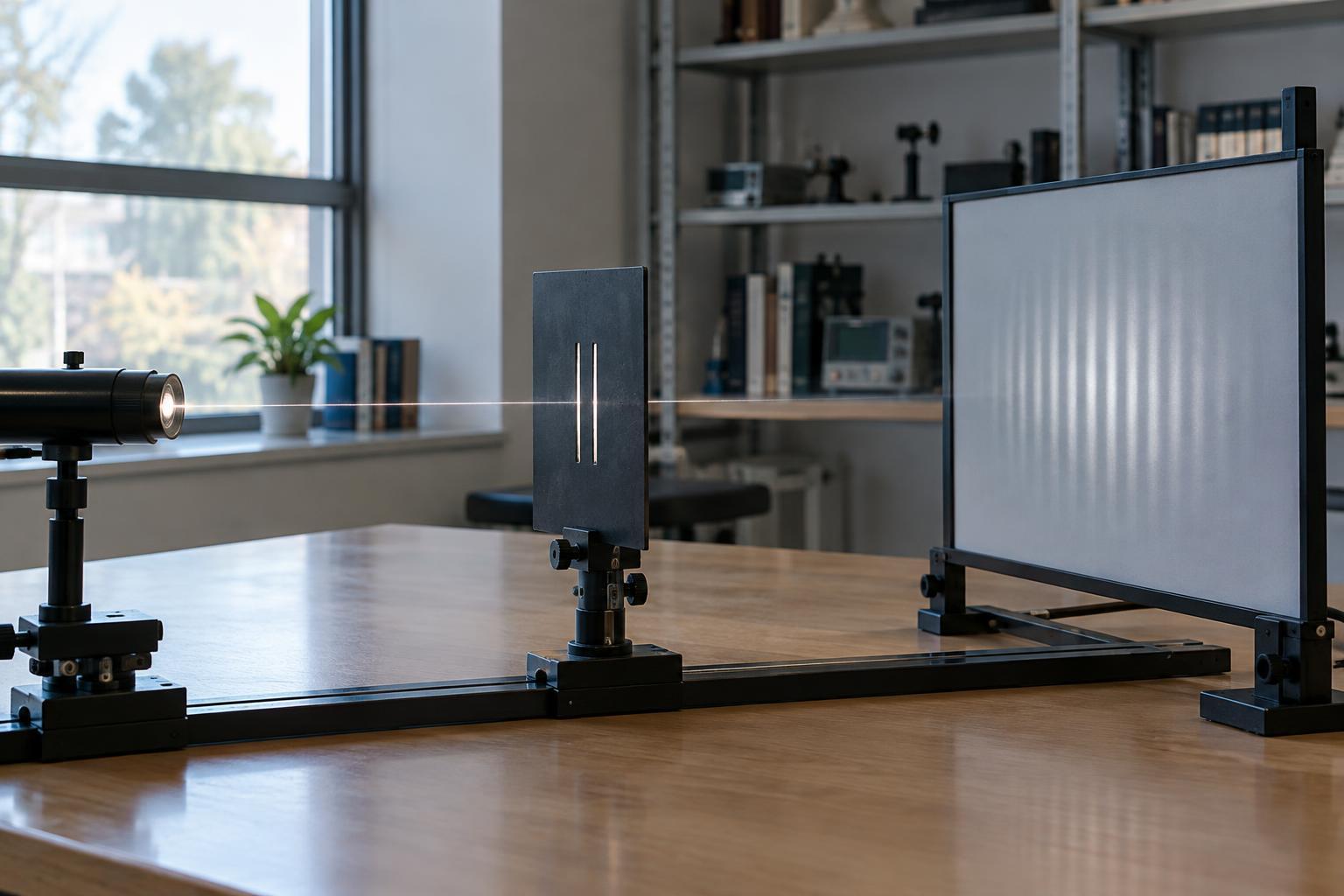
Physics ExplainedQuantum superposition is often described as a particle being in two places at once. That phrase can be useful, but it can also mislead. Here is a practical guide to quantum states, interference, measurement and the limits of the familiar cat analogy.
Read article · 4 min↗

Physics ExplainedA moving clock can tick more slowly than a stationary one when their readings are compared in a chosen frame of reference. Light clocks reveal why this happens—and why there is no single clock that sets the pace for the universe.
Read article · 4 min↗

Physics ExplainedA mirror sends light back; a glass of water can make a straw look bent. Learn how reflection and refraction differ, why both can happen at one surface, and where to spot them in everyday life.
Read article · 4 min↗
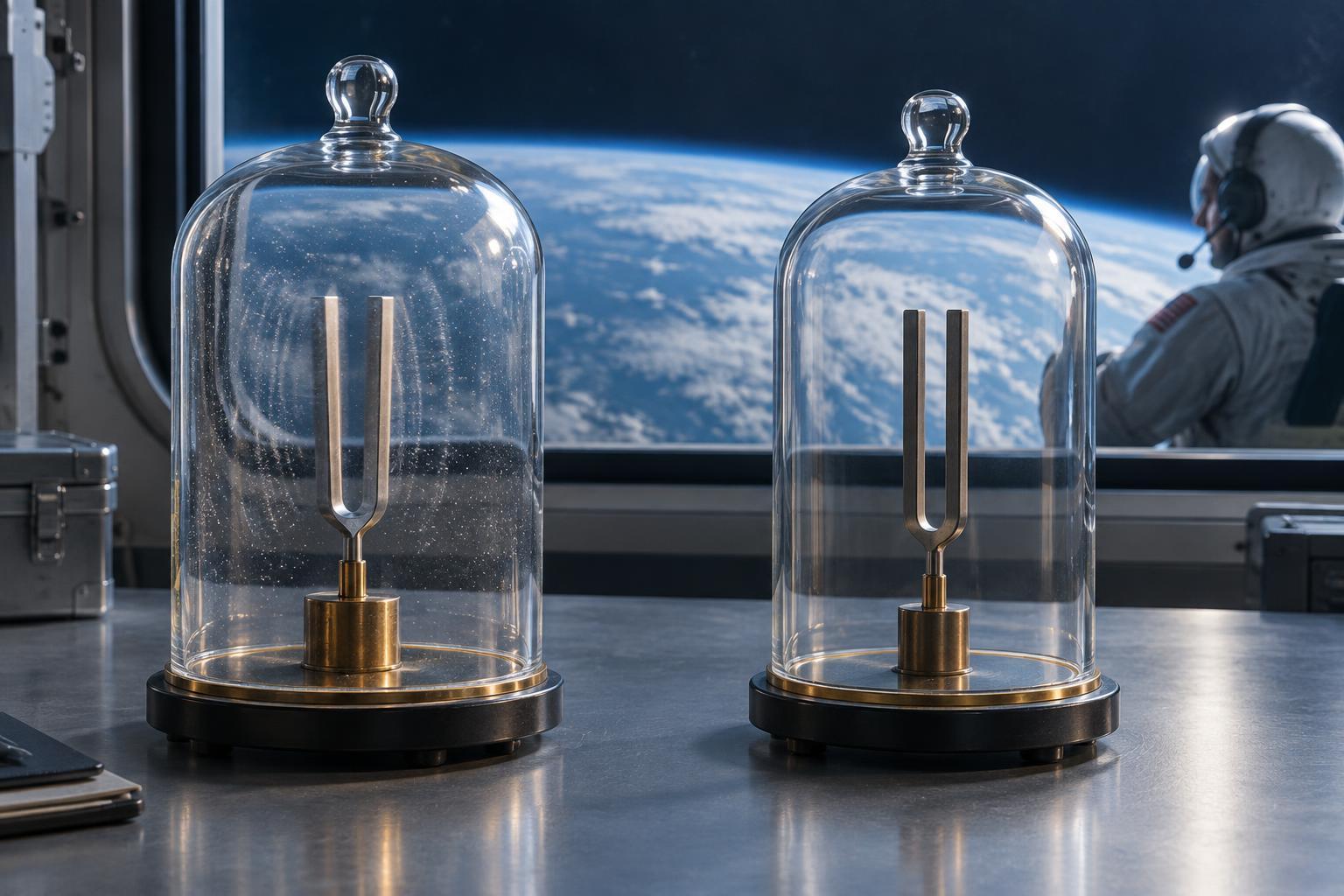
Physics ExplainedSound needs matter to carry a vibration from one place to another. Learn how sound moves through air, water and solids, why a vacuum interrupts that process, and how astronauts can still communicate in space.
Read article · 4 min↗

Physics ExplainedWaves appear in water, sound and light, but what do their measurements mean? A guide to amplitude, frequency and wavelength, with everyday examples and one useful equation.
Read article · 4 min↗
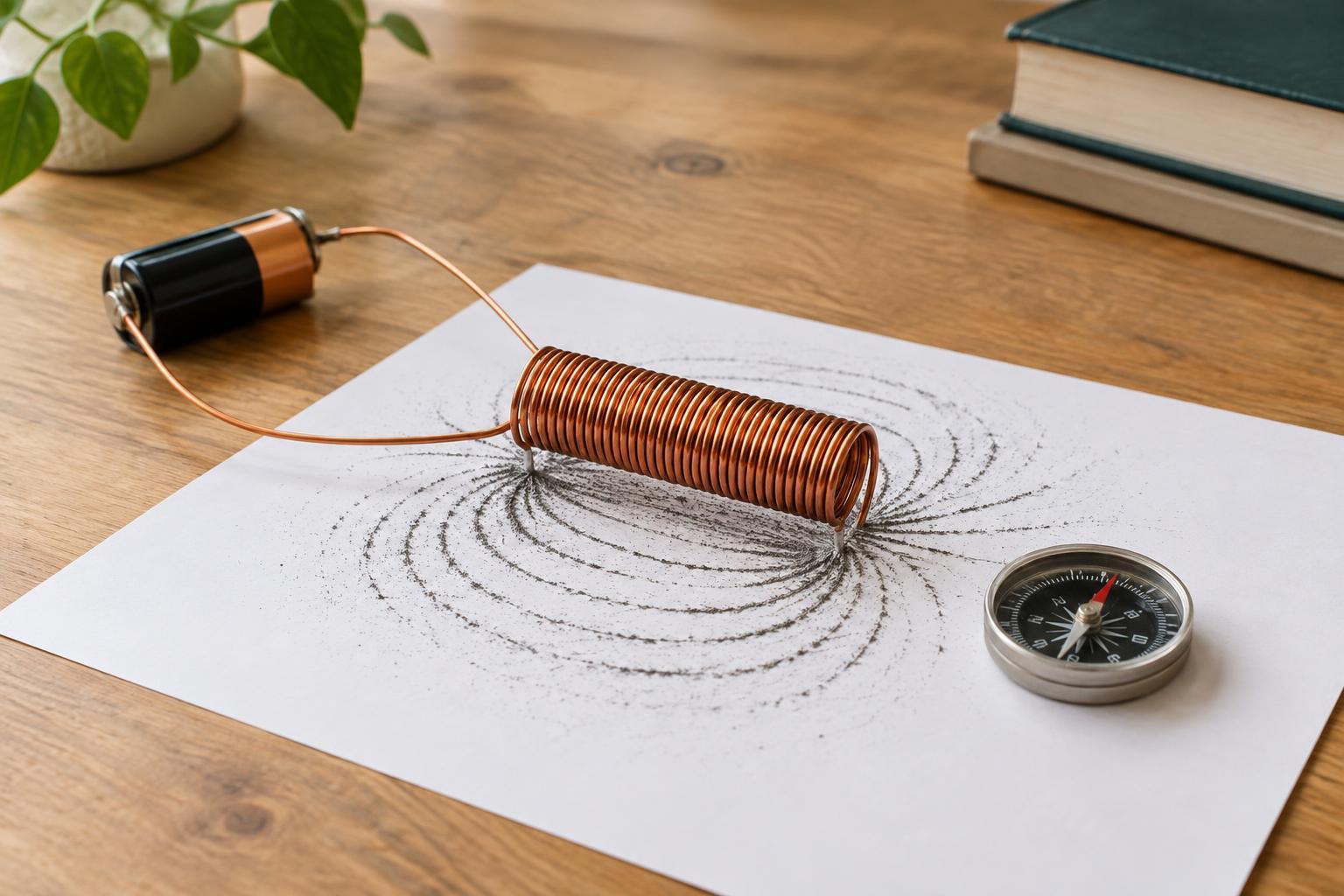
Physics ExplainedA wire carrying electric current creates a magnetic field around it. Learn how the field takes shape, why coils make it stronger, and how this connection powers familiar devices.
Read article · 4 min↗
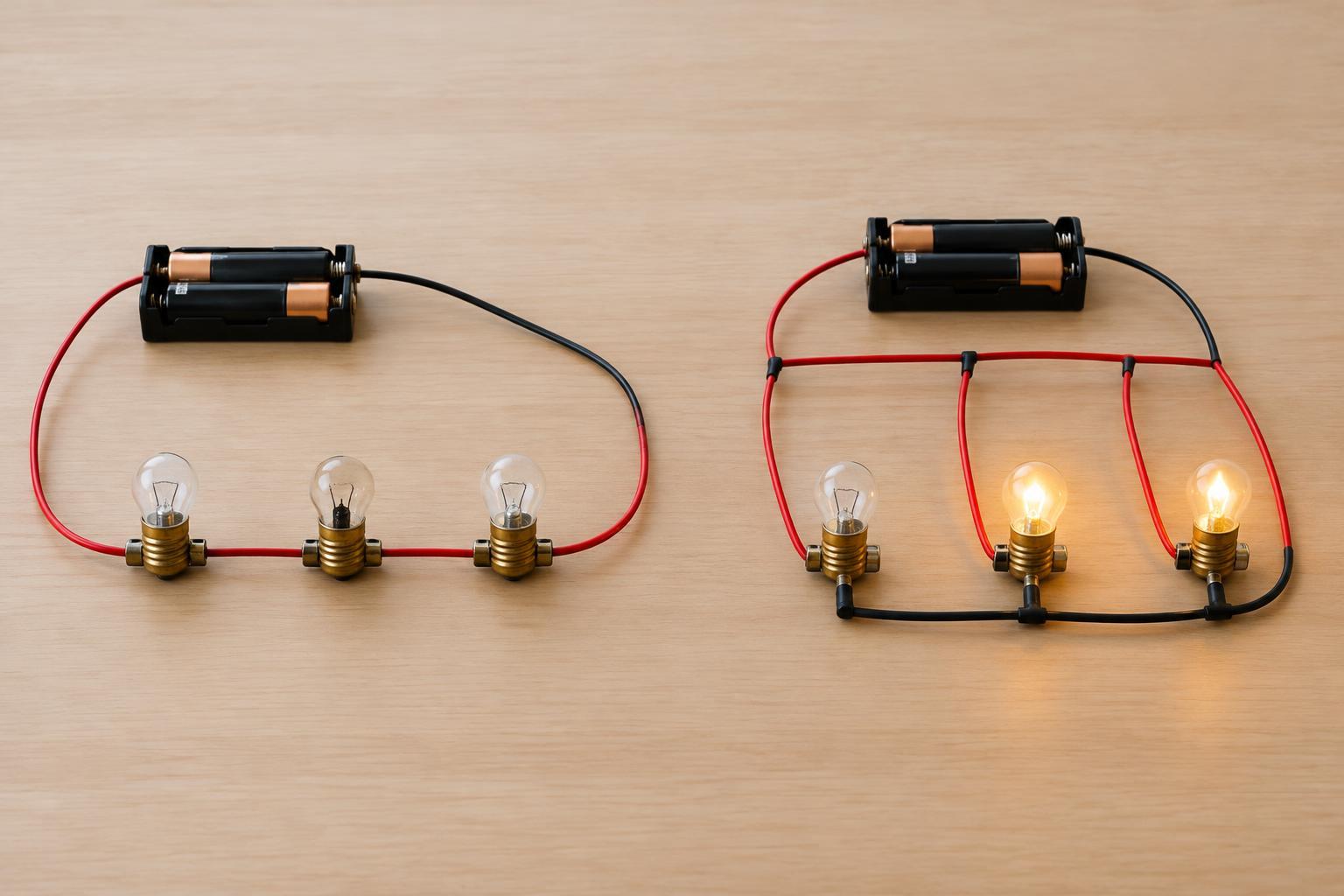
Physics ExplainedWhy does one failed bulb sometimes darken an entire string while other lights stay on? The answer depends on the paths electricity can take. A simple look at series and parallel circuits explains what happens to current, voltage, and the remaining bulbs.
Read article · 4 min↗
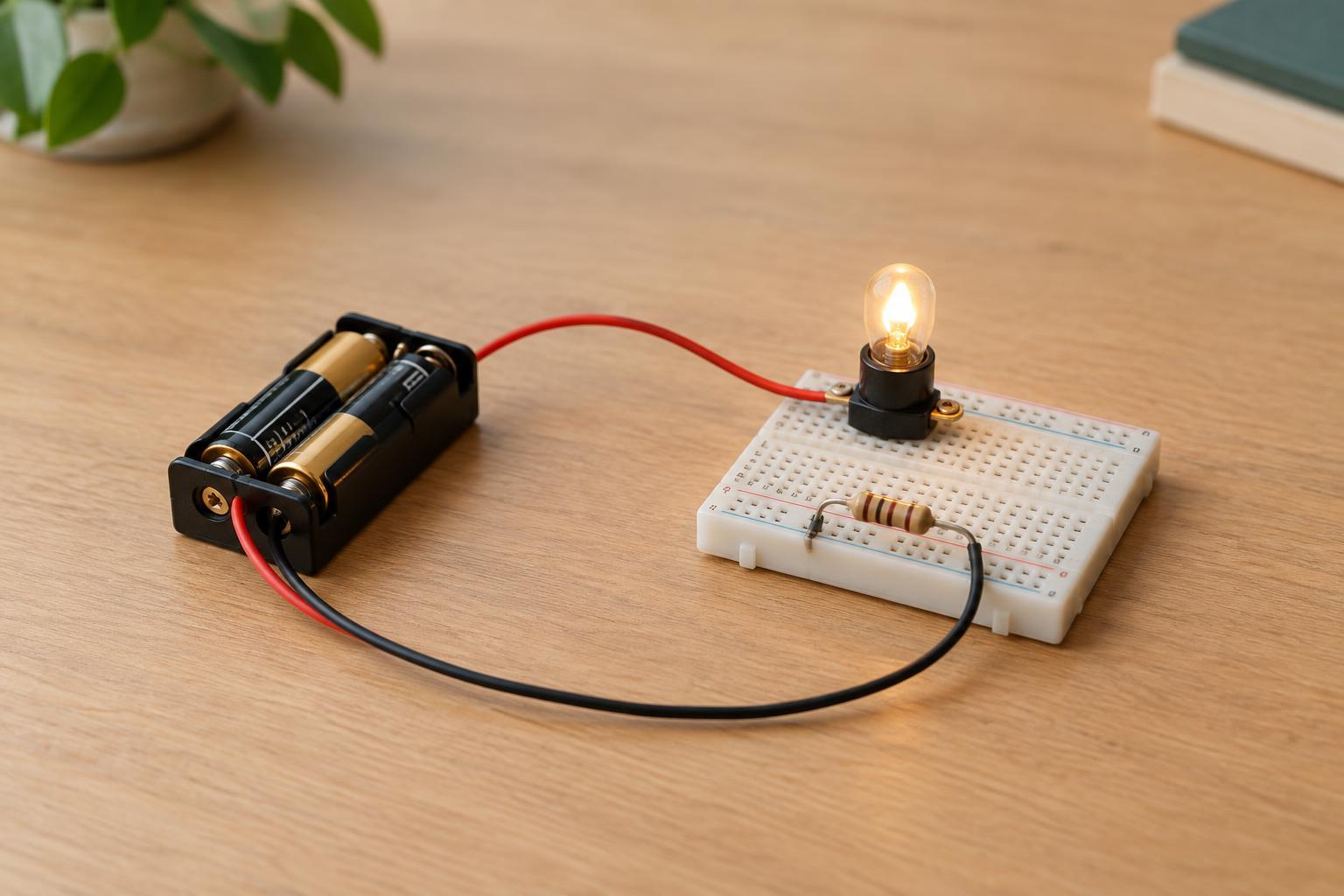
Physics ExplainedWhat do volts, amps and ohms actually describe? Learn how voltage, current and resistance work together, why Ohm’s law is useful, and what everyday circuits can teach us about electrical energy.
Read article · 4 min↗

Physics ExplainedWhy does coffee cool, perfume spread, and ice melt in a warm room? Entropy helps explain the direction these processes tend to take, without reducing the idea to the misleading slogan that everything becomes more disordered.
Read article · 4 min↗

Physics ExplainedA hot cup of tea and a warm bathtub can have very different temperatures and amounts of energy. Learn what temperature measures, what scientists mean by heat, and why the distinction explains familiar experiences.
Read article · 4 min↗

Physics ExplainedThe deeper you go underwater, the greater the pressure you feel. Here is how the weight of water above you creates that pressure, why it acts in every direction, and what it explains about dams, ears and buoyancy.
Read article · 4 min↗

Physics ExplainedA steel nail sinks, yet a steel ship can float. The difference becomes clear when you consider how much fluid an object displaces and how its weight compares with the upward push of that fluid.
Read article · 4 min↗

Physics ExplainedA stubborn bolt often yields to a longer wrench. The reason is torque: a turning effect that depends on both the force you apply and its distance from the pivot. Here is how leverage works, why the direction of your push matters, and why an easier push does not mean less work overall.
Read article · 4 min↗
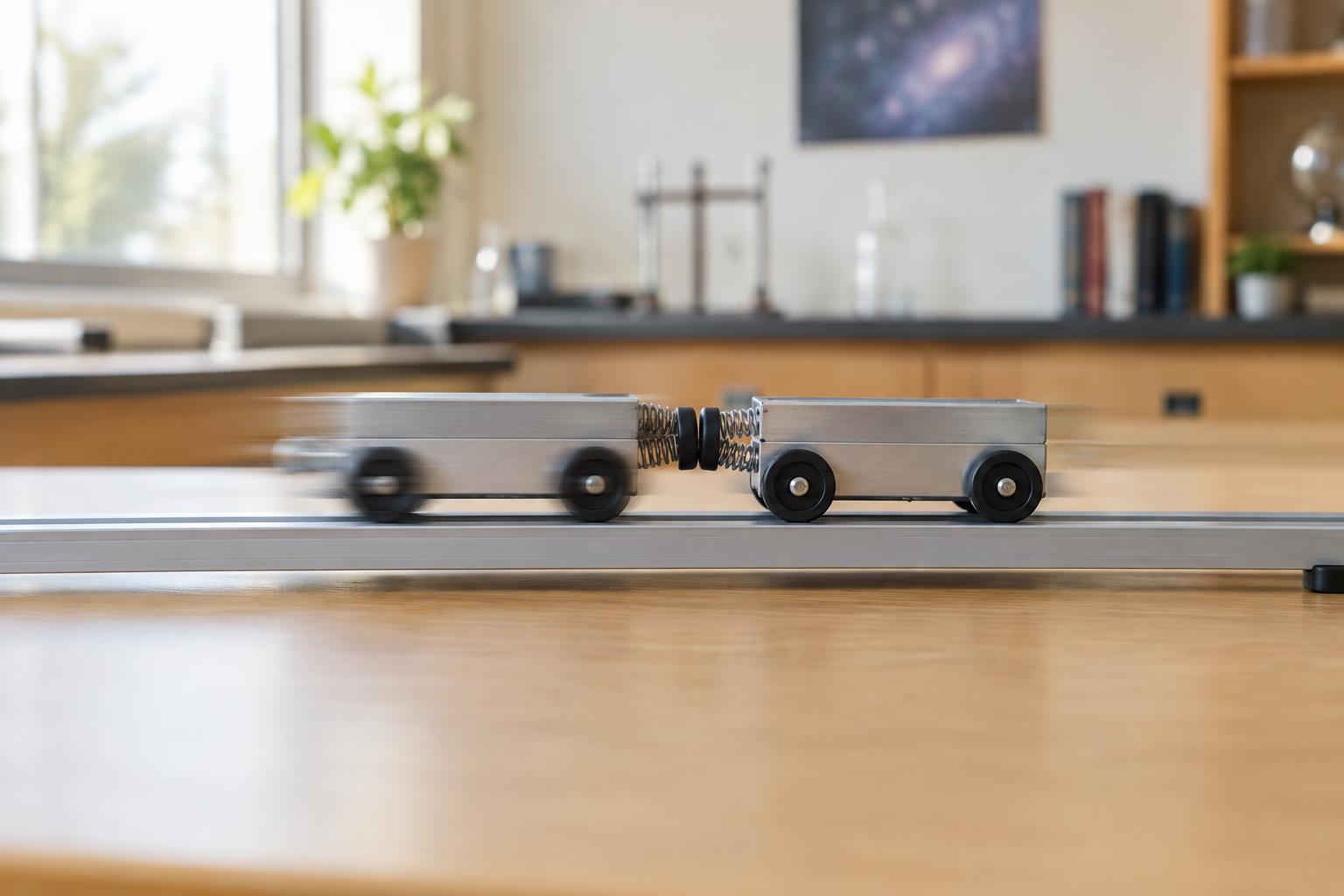
Physics ExplainedWhen objects collide, they can change speed, direction and shape. Yet the total momentum of a suitably chosen system remains the same if outside forces have little effect during the collision. Here is how that rule works, and why it does not mean that kinetic energy is always conserved.
Read article · 4 min↗


Physics ExplainedA heavy box may resist your first push, then move with less effort. The difference comes from static and kinetic friction, two ways surfaces resist motion. Here is how they work, why the usual rules have limits, and where you can notice them in everyday life.
Read article · 4 min↗

Physics ExplainedA bus stopping, a cart rolling and a person walking all illustrate Newton’s laws of motion. Learn how combined forces, mass and action–reaction pairs explain changes in speed and direction.
Read article · 4 min↗

Physics ExplainedSpeed tells you how fast something moves. Velocity adds direction. Acceleration describes how velocity changes. Everyday trips, turns and stops show why these three ideas are related but not interchangeable.
Read article · 4 min↗

Physics ExplainedMass and weight seem interchangeable until you step onto a scale, ride an elevator or imagine standing on the Moon. Learn what each measures and why the distinction helps explain familiar and surprising experiences.
Read article · 3 min↗