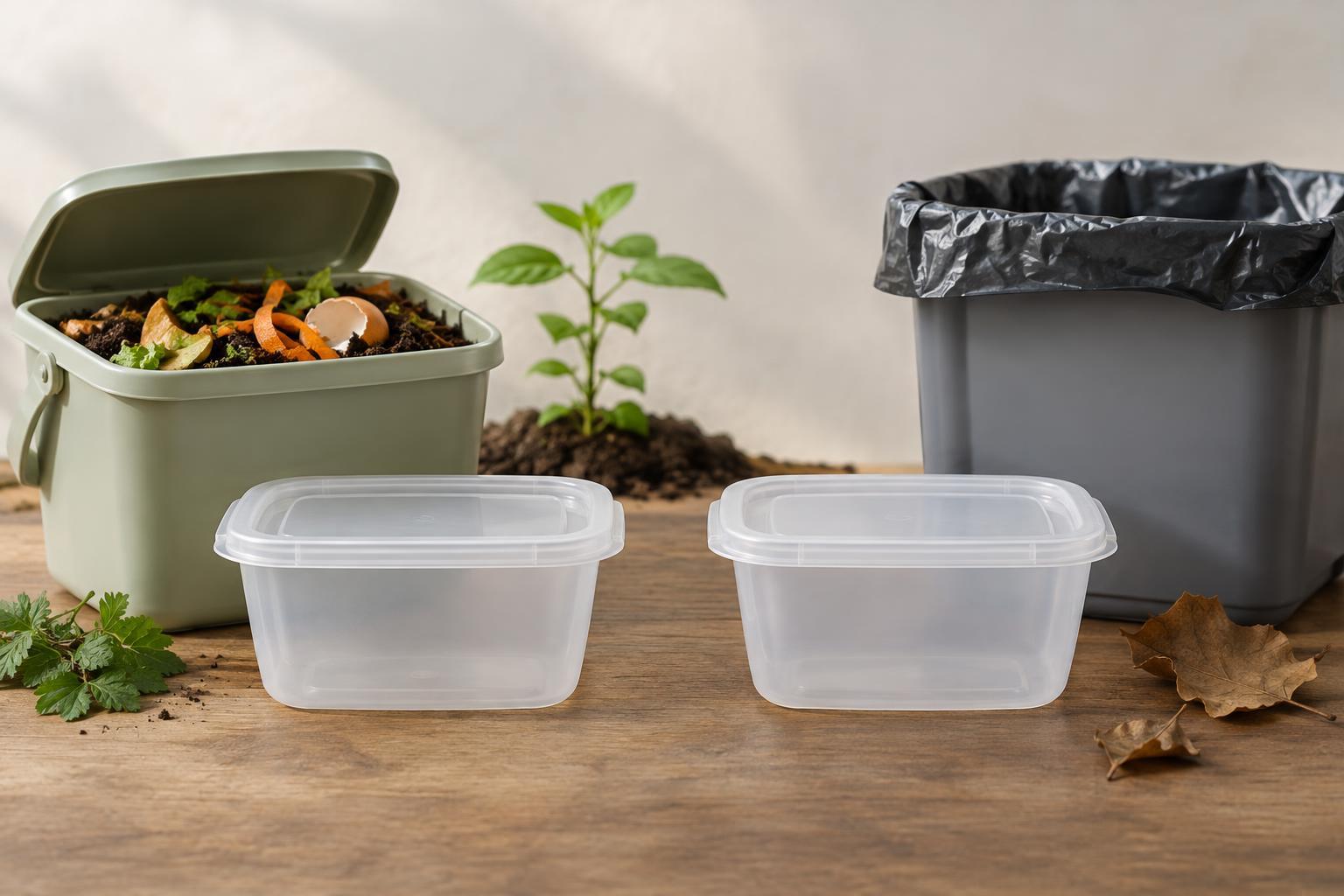
The difference starts with conditions
A plastic item labeled biodegradable is designed to be broken down by living organisms, such as bacteria or fungi. But the word alone does not tell you how quickly that will happen, what conditions are needed, or how completely the material will break down. A product that changes substantially in a controlled test may behave very differently in a cool garden, a landfill, or the sea.
Compostable is a more specific claim. It generally means a material is intended to break down during a composting process while meeting defined criteria for the resulting compost. The details still matter: some products are designed for industrial composting facilities, not backyard compost heaps. Neither label means an item can safely be dropped outdoors.
Why the same plastic behaves differently in different places
Microbes help dismantle certain polymers, the long chains of molecules that give plastics their useful properties. Their activity depends on factors such as temperature, moisture, oxygen, and the surrounding microbial community. An industrial composting system can manage these conditions more consistently than an outdoor pile. A landfill, by contrast, is built to contain waste, not to provide ideal conditions for composting.
The shape of an item matters too. A thin film and a thick fork made from similar materials may not break down at the same rate because microbes and moisture can reach their interiors differently. Breaking into visible fragments is also not the same as being fully consumed by microorganisms. Without a clear test method and disposal setting, a claim about how fast something “disappears” tells only part of the story.
What to look for on a label
Start with the intended destination. Does the package say “industrially compostable” or “home compostable”? Those are different claims. Look for a recognized certification mark or a reference to a specific compostability standard, then check what the certification covers. A compostable bag, for example, does not necessarily make every label or piece of packaging attached to it compostable.
Next, ask whether the relevant collection service accepts the item. A product can meet a compostability standard and still be unwelcome at a local facility, where sorting practices and processing times may differ. If the label gives only a broad word such as “green” or “biodegradable” without a disposal method, treat it as incomplete guidance rather than a guarantee of environmental benefit.
Bio-based, biodegradable, and recyclable are separate ideas
Bio-based describes where some or all of a material’s raw ingredients come from, such as plants. It does not, by itself, say whether the finished plastic will biodegrade. Conversely, whether a material biodegrades depends on its chemical structure and the conditions around it, not simply on whether its starting ingredients came from living things.
Recyclable describes another route altogether: collecting and processing a material for use again. A compostable plastic is not automatically suitable for ordinary plastic recycling. If placed in the wrong collection bin, it may complicate sorting or affect the quality of recovered material. The most useful label therefore identifies both the material’s properties and the waste stream it belongs in.
A practical way to decide what to do
Before disposal, check the item’s instructions and your local collection rules. If an accepted compost collection is available, follow its requirements, which may distinguish food-soiled packaging from other products. Put an item in home compost only when it is specifically identified as suitable for that setting and you are comfortable managing the pile’s conditions. Do not assume that a compostable label makes an item suitable for recycling or for disposal in nature.
When the appropriate collection route is unavailable or unclear, follow local guidance for the remaining waste rather than guessing. Better still, consider whether a reusable item or less packaging would serve the same purpose. Material labels describe possibilities under particular conditions; they do not erase the resources used to make an item or the need to dispose of it carefully.