Start with DNA: the information-bearing molecule
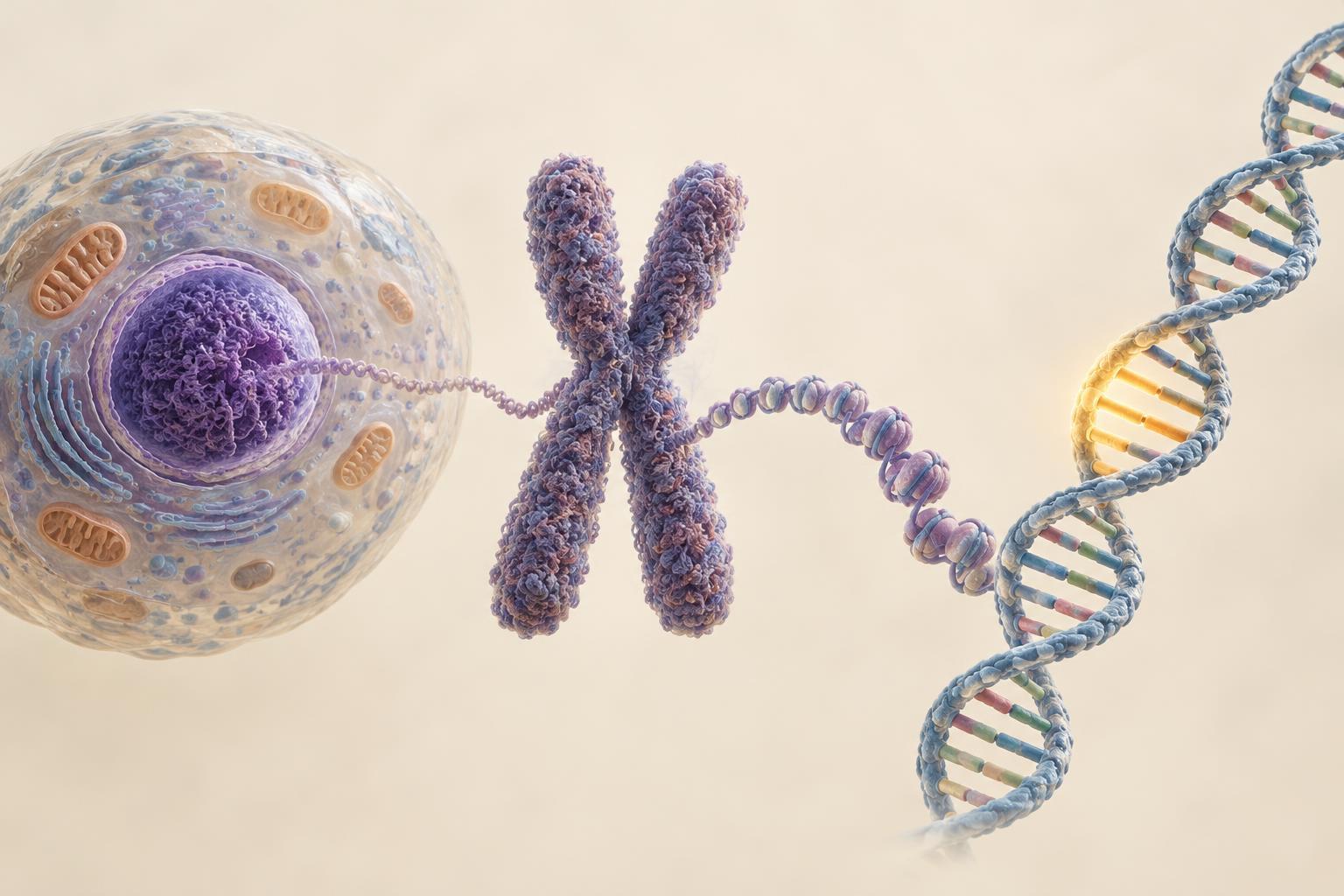
DNA is a long molecule that carries biological information. Its familiar double-helix shape comes from two strands joined by pairs of chemical building blocks called bases. The four bases are commonly abbreviated A, T, C and G. Along each strand, their order forms a sequence that cells can copy and use.
A useful comparison is a book written with a four-letter alphabet, but the comparison has limits. DNA does not give a cell a complete set of instructions that it follows without context. Cells also need proteins and other molecules to read, maintain and respond to DNA. Signals from within and outside the cell help determine which parts of the sequence are used.
Genes are stretches of DNA with jobs
A gene is a stretch of DNA used to produce a functional molecule. Many genes contain information for making proteins, which carry out tasks such as building cell structures, speeding up chemical reactions and receiving signals. Other genes produce RNA molecules that do useful work without being turned into proteins.
Making a protein usually begins when a cell copies a gene into RNA. The cell then uses that RNA as a guide to assemble a chain of amino acids, which folds into a working protein. The details of this process vary, but the distinction is important: a gene is not a protein. It is DNA that can be used in producing one or more functional products.
Not all DNA is part of a gene. Some stretches help control when, where and how strongly genes are used. Other regions have different roles, including helping chromosomes function. This is why describing DNA as nothing more than a list of protein recipes leaves out much of the picture.
Chromosomes package long DNA molecules
A chromosome is a long DNA molecule packaged with proteins. In the nuclei of human cells, DNA wraps around proteins called histones and is folded further so that it can fit within the cell. This packaging does more than save space: it also affects how readily particular regions of DNA can be accessed.
Most human body cells have 46 nuclear chromosomes arranged in 23 pairs. Typically, one chromosome of each pair came from each parent. The members of a pair carry many of the same genes in corresponding positions, though their DNA sequences may differ. Such differences are called variants; different versions of a gene are often called alleles.
The neat, X-shaped chromosome seen in many diagrams represents a particular stage before a cell divides, when a chromosome has been copied and its two copies remain attached. Chromosomes do not always look like Xs. For much of a cell’s life, their DNA is less tightly packed and individual chromosomes are harder to distinguish under a microscope.
How the pieces fit together in inheritance
The relationship can be put simply: chromosomes are packages of DNA, and genes are particular stretches of that DNA. When a cell divides, it must pass DNA to new cells. Before ordinary body-cell division, chromosomes are copied so that each new cell can receive a set. Errors during copying can introduce changes in DNA sequence.
Egg and sperm cells are made by a different kind of division. In humans, each normally carries 23 nuclear chromosomes rather than 46. When an egg and sperm combine, the resulting cell typically has 23 pairs. This is one reason children can share traits with both parents while having their own combinations of genetic variants.
Inheritance is not always a simple matter of one gene producing one visible trait. Many traits are influenced by multiple genes, the way those genes are regulated and a person’s environment. Some cells also contain a small amount of DNA in mitochondria, outside the nucleus, adding another detail to the basic chromosome picture.
Why the distinction matters
Keeping the terms separate makes biological explanations easier to follow. If someone says a gene has changed, they are referring to a change involving a particular stretch of DNA. If a chromosome is missing or has an altered structure, the change may affect many genes or the way they are used. And if cells with the same DNA behave differently, gene activity may help explain why.
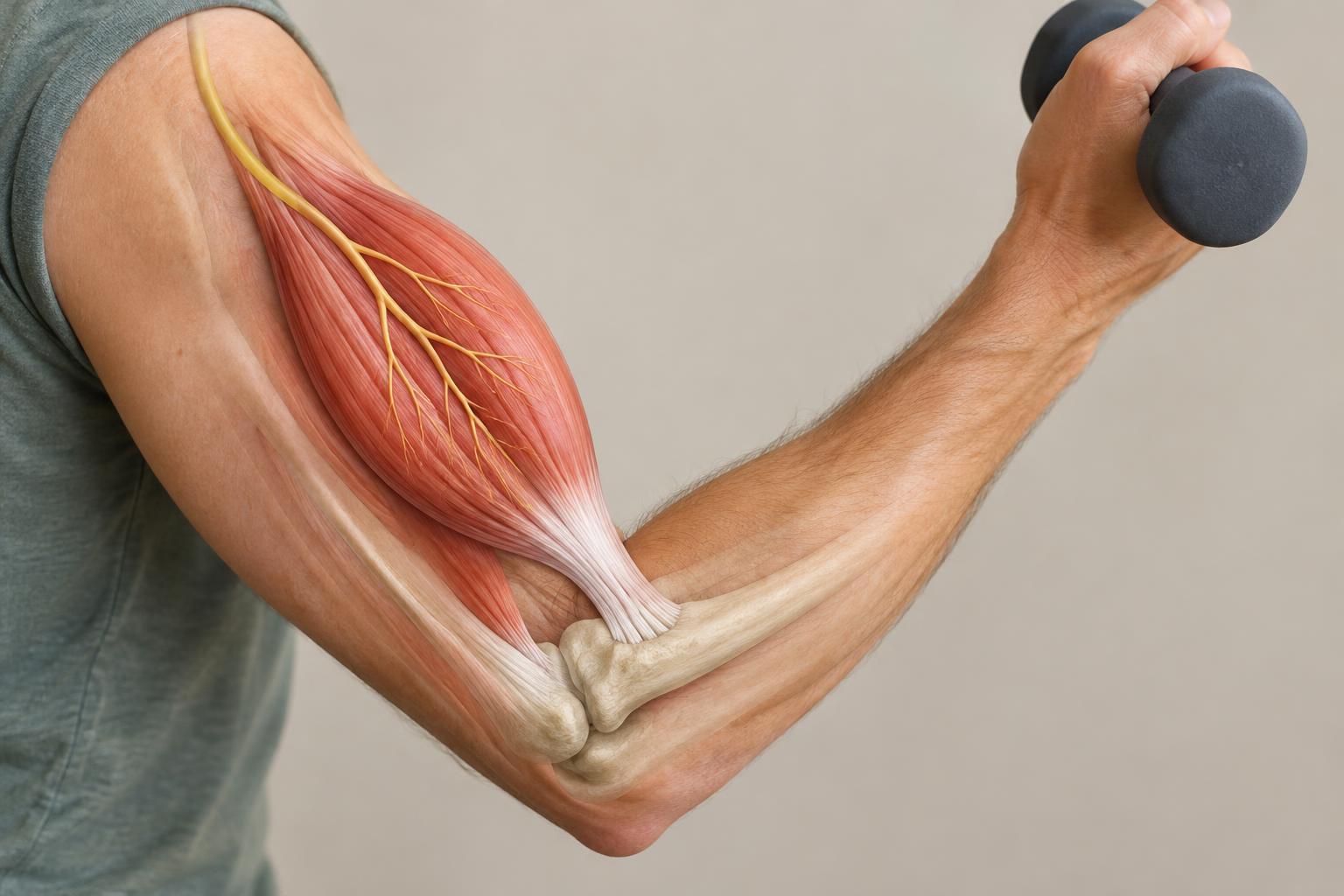
Consider a muscle cell and a skin cell in the same person. They usually contain essentially the same nuclear chromosomes, yet they use different sets of genes to do their jobs. DNA provides information, genes identify functional regions, and chromosomes organize and carry that information. What a cell does depends not only on what it contains, but also on what it uses.