A bond begins with close contact
An adhesive can only join surfaces where it reaches them. Even a surface that looks smooth has tiny ridges, pits and gaps. While an adhesive is liquid or soft, it can flow across some of these features and bring its molecules close to the material beneath. This spreading is called wetting. If the adhesive beads up instead, much of the apparent joint may never make close contact.
The surface and the adhesive both influence wetting. Water-based glue, for example, may spread readily on a clean, absorbent material but resist spreading on some plastics. Dust, grease or a thin film of oil can change the surface the adhesive encounters. Rather than bonding to the intended material, it may stick to that weak film, which can later lift away.
What holds the surfaces together?
Once an adhesive makes contact, several effects can contribute to a bond. Attractions between molecules act across very small distances. Some adhesives also form chemical bonds with suitable surfaces, while others flow into pores or surface texture and grip as they harden. No single mechanism explains every glue joint: wood glue in porous wood and an adhesive on smooth glass face different opportunities and limitations.
The adhesive must also become strong enough to hold its own shape. Depending on its formulation, it might harden as water or solvent leaves, as it cools, or as a chemical reaction links its components into a network. A joint can fail within the adhesive itself, at the boundary between adhesive and surface, or in the material being joined. Where it breaks can offer a clue about what needs to change.
Why cleaning, drying and texture matter
Surface preparation removes barriers to contact. Brushing away loose particles and cleaning off grease can leave a firmer surface for the adhesive to meet. Drying matters when moisture would interfere with the chosen adhesive or its curing process, though some products are designed to work on damp surfaces. Follow the adhesive’s instructions: preparation that helps one product may be unnecessary or unsuitable for another.
Light abrasion can sometimes improve a bond by removing a weak outer layer, creating fresh surface and giving the adhesive more texture to contact. More roughness is not automatically better. Deep scratches may trap air or prevent a thin adhesive layer from contacting both sides evenly. After sanding, loose debris still needs to be removed. On some plastics or coated materials, a specified primer or surface treatment may be more useful than abrasion.
The joint design matters as much as the glue
A well-prepared surface cannot compensate for every kind of stress. Adhesive joints often perform differently when forces pull evenly across a broad area than when an edge is lifted and peeled. Peeling concentrates force near a moving boundary, much as pulling up one corner of a sticker is easier than sliding the whole sticker sideways. Increasing the bonded area and avoiding exposed edges can help when the design allows it.
Materials can also expand, bend or vibrate differently. A rigid adhesive between parts that flex repeatedly may crack, while a more flexible one may accommodate movement. Conversely, a flexible bond may not suit a joint that must hold its shape under load. Choosing an adhesive therefore means considering the materials, the gap between them, the expected stresses and the conditions the finished object will face.
Give the bond time to develop
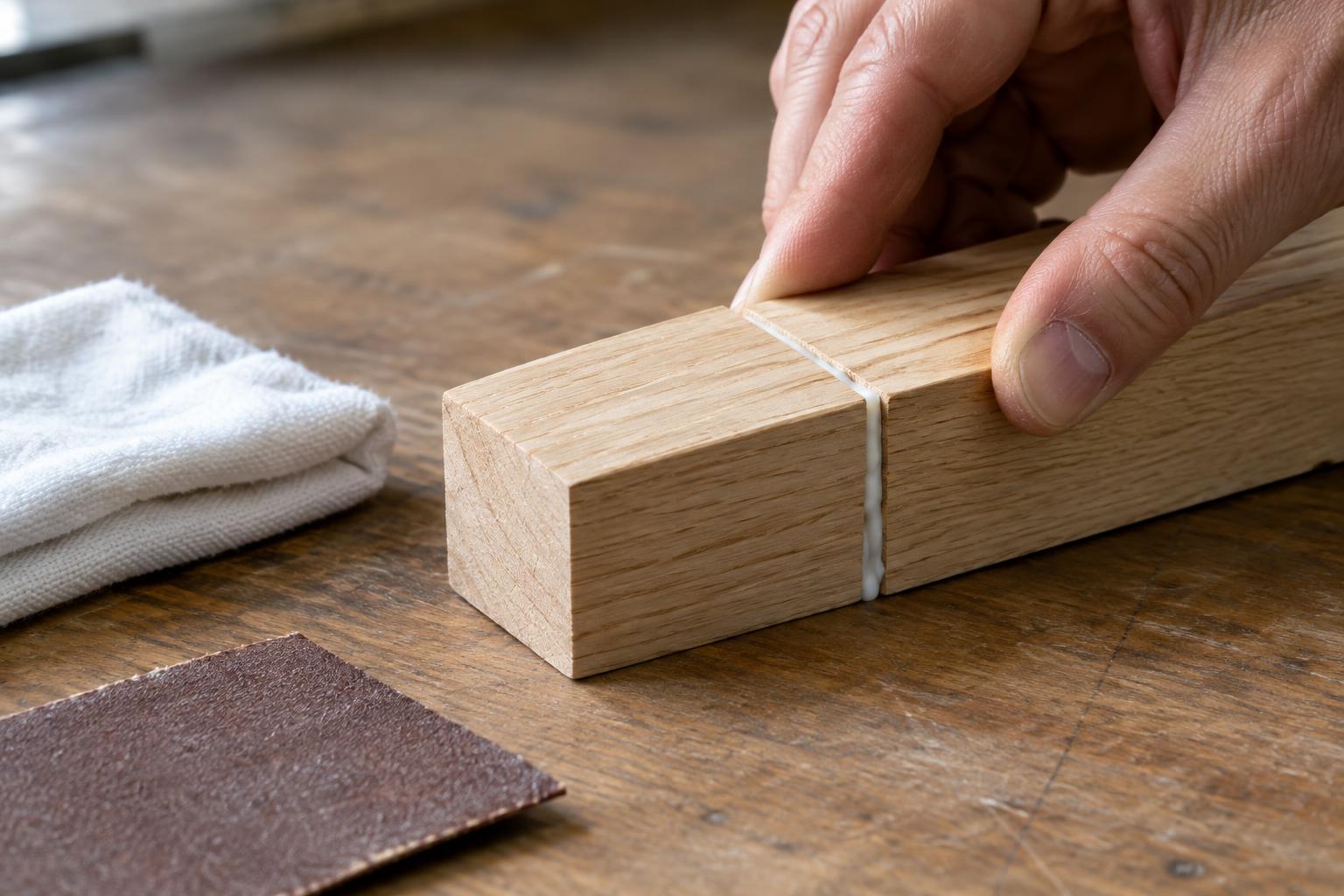
Applying the adhesive is not always the final step. Some products need pressure to bring surfaces together; others need a controlled gap or an initial waiting period before assembly. A surface may feel dry while the bond is still developing strength. Moving or loading the joint too soon can disrupt contact or leave it weaker than intended.
For a practical repair, begin by identifying both materials and removing anything loose or contaminated. Check whether the adhesive is suitable for those materials and the intended environment, then use its directions for application, clamping and curing. If a joint must carry significant weight or its failure could cause harm, do not rely on a casual glue repair alone. The central lesson is simple: adhesive strength starts at the surfaces, not in the bottle.