A gene is an instruction, not a finished product
Proteins do much of the hands-on work in cells. Some speed up chemical reactions, some give cells structure, and others carry substances or help cells respond to signals. To build a protein, a cell uses information stored in DNA. A gene is a stretch of DNA whose sequence helps specify a functional product. For protein-coding genes, that product begins as a chain of amino acids that can become a protein.
DNA is written in a sequence of four chemical bases, often represented by the letters A, T, C and G. The order matters, much as the order of letters matters in a sentence. But a gene is not simply taken off a shelf and turned into a protein. The cell first makes an RNA copy of the relevant information, then reads that copy to assemble amino acids in the right order. These steps are called transcription and translation.
Transcription makes a working RNA copy
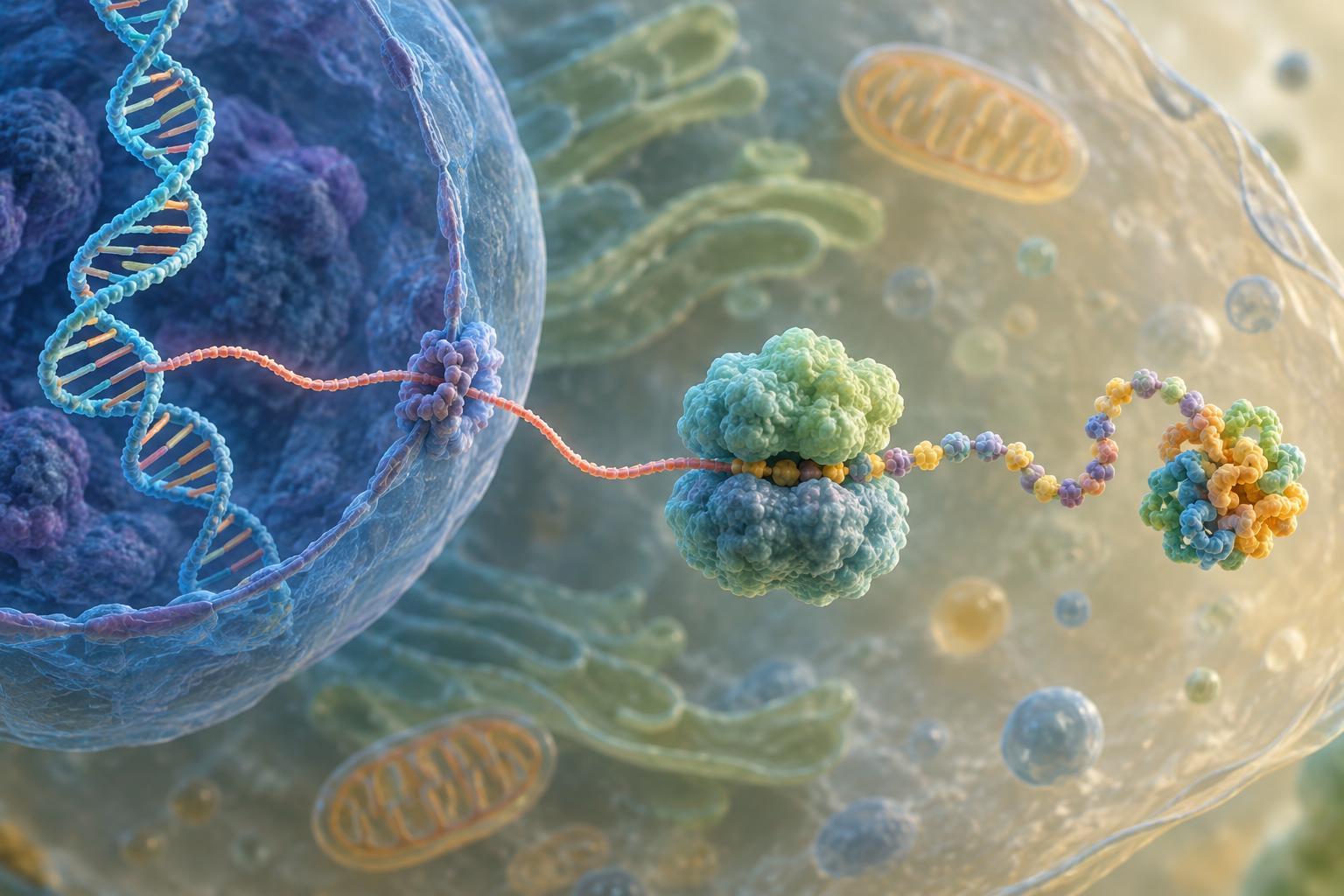
During transcription, a molecular machine called RNA polymerase moves along one strand of DNA and builds a complementary RNA molecule. RNA resembles DNA, but it usually consists of a single strand and uses the base U in place of T. Copying a gene into RNA lets the cell use its instructions while retaining the DNA as a more stable store of information.
In plants, animals and other organisms with a cell nucleus, transcription takes place in the nucleus. The first RNA copy of a protein-coding gene often needs editing before it can be used. Segments called introns are removed, and the remaining segments, called exons, are joined. The RNA also receives features at its ends that help protect it and support later steps. The resulting messenger RNA, or mRNA, can leave the nucleus and reach the cell’s protein-making machinery. Bacteria lack a nucleus, and their path from transcription to translation is generally more direct.
Ribosomes translate the message
A ribosome reads an mRNA message three bases at a time. Each three-base unit is a codon. Most codons specify an amino acid, while stop codons signal that the growing chain is complete. A start codon tells the ribosome where to begin reading and establishes how the rest of the message is grouped into threes. Shifting that starting point would change the codons that follow, potentially changing the entire protein.
Transfer RNA molecules, or tRNAs, help match codons with amino acids. Each tRNA carries an amino acid and has a region that can pair with a matching codon on the mRNA. As the ribosome moves along the message, it links the incoming amino acids into a chain. This process is translation: information expressed in the language of nucleic-acid bases becomes a sequence in the language of amino acids. The ribosome stops when it reaches a stop codon and releases the chain.
A chain must become a working protein
A newly assembled amino-acid chain is not always ready to work. Its sequence influences how it folds into a three-dimensional shape, and that shape is often crucial to what it can do. Some proteins fold largely on their own; others are helped by molecules called chaperones. Cells may also trim a chain, attach chemical groups to it, or combine it with other chains. These finishing steps can affect a protein’s location, stability and activity.
Consider an enzyme that helps break down a substance in food. Its useful shape creates a region where particular molecules can bind and react. If the enzyme folds incorrectly, that region may not work as intended. This is one reason the order of amino acids matters: a gene’s sequence can influence not just which building blocks appear, but how the final protein behaves.
Cells control when instructions are used
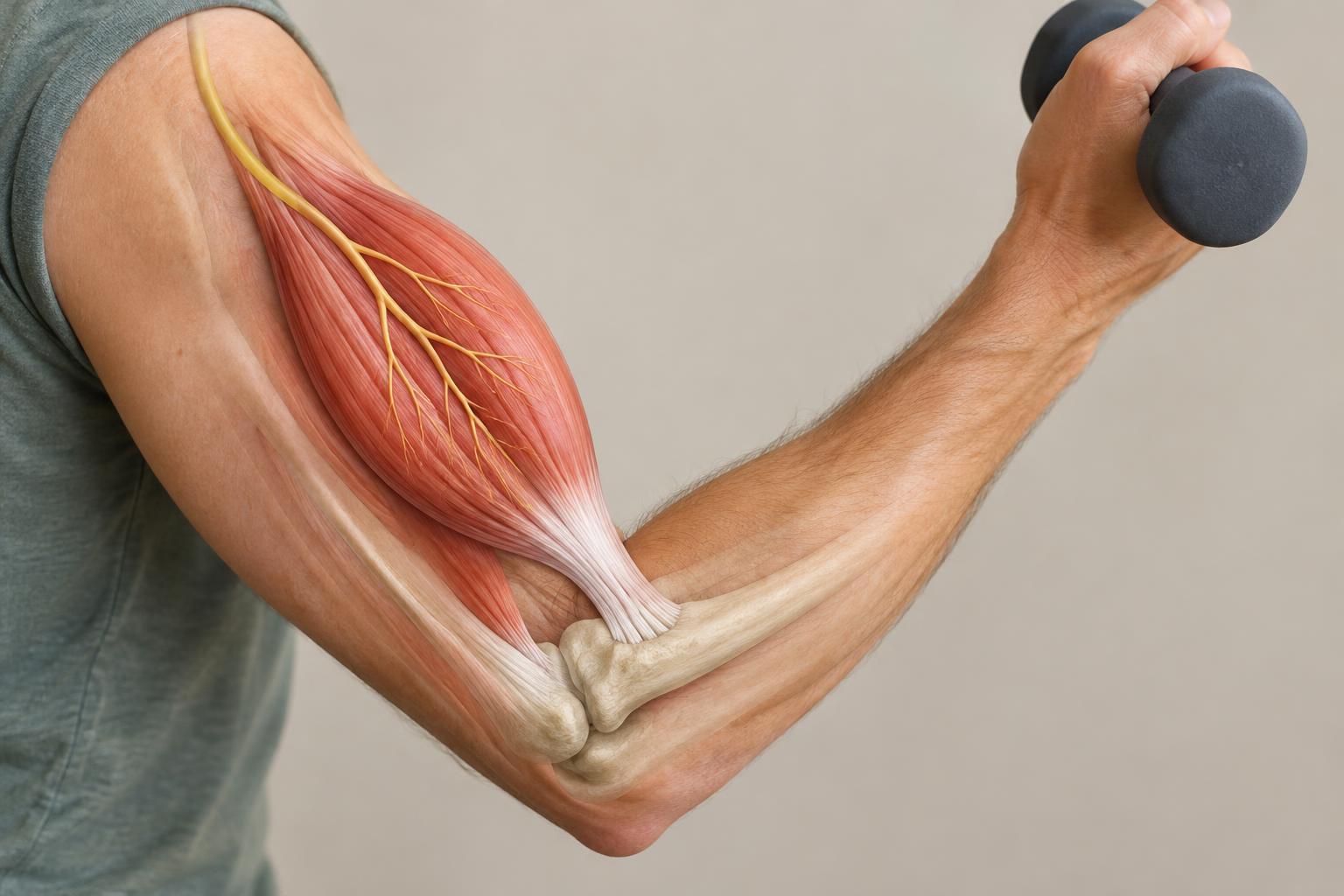
Cells in the same organism generally contain the same DNA, yet a muscle cell and a skin cell make different sets and amounts of proteins. One reason is gene regulation. Signals inside and outside a cell can influence whether a gene is transcribed, how its RNA is processed, how long that RNA lasts, and how readily a ribosome translates it. Cells can also adjust how quickly existing proteins are broken down.
Changes in DNA can alter this process, but their effects vary. A change in a protein-coding sequence might alter an amino acid, leave the amino-acid sequence unchanged, or interrupt production of the protein. A change elsewhere might affect when or how strongly a gene is used. The basic path remains the same: DNA stores information, RNA carries a usable message, and cellular machinery builds and manages proteins. Seeing the path as a series of steps helps explain both how cells perform everyday tasks and where differences in their behavior can arise.