From a meal to a usable fuel
Food provides molecules that cells can take apart and rearrange. Carbohydrates, for example, can be digested into simple sugars such as glucose. Cells also obtain usable fuel from fats and, when needed, proteins. Cellular respiration is the collection of reactions that transfers energy from these fuels into forms a cell can use, especially a molecule called ATP.
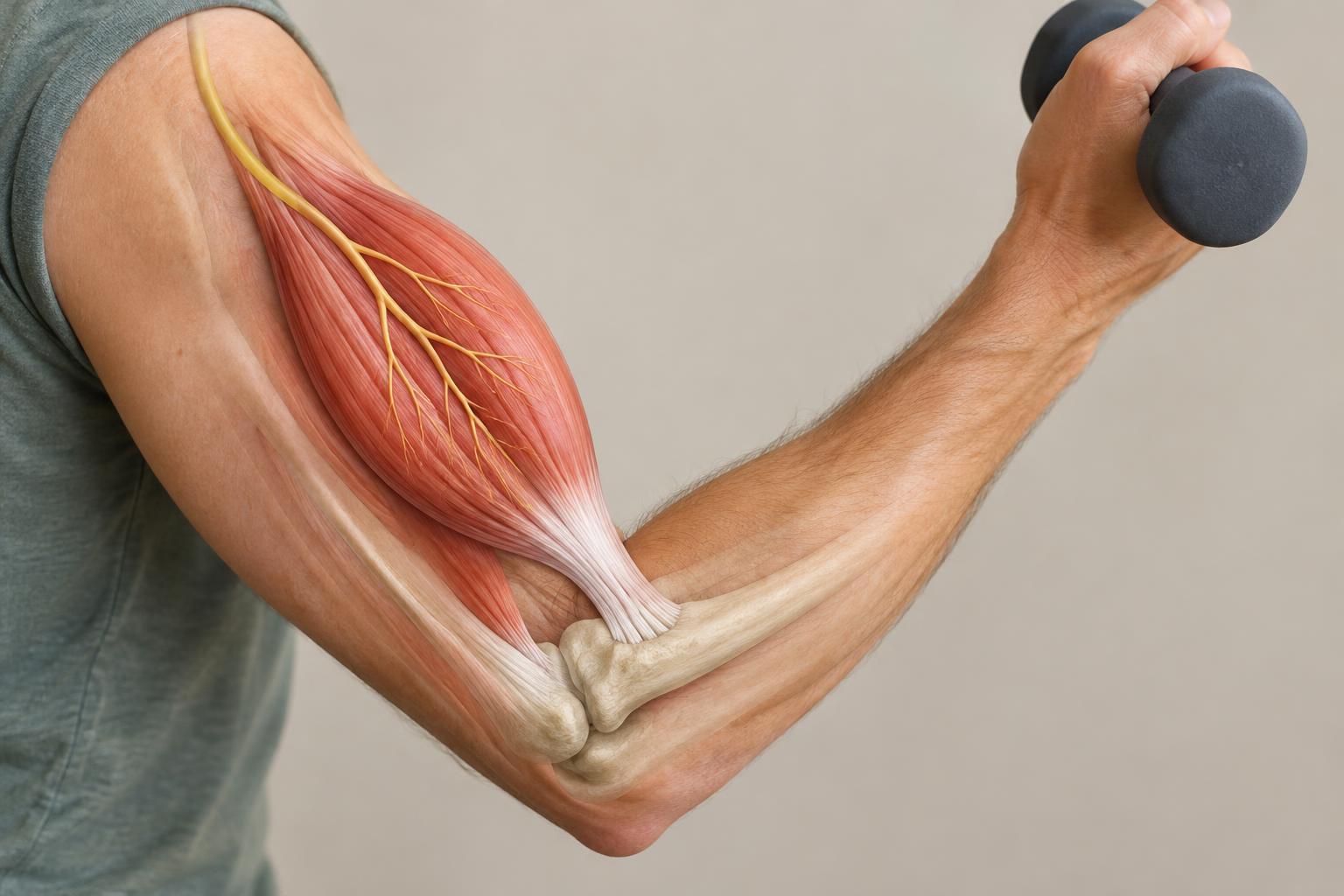
ATP acts as a convenient energy carrier. When a cell uses ATP, it can couple its breakdown to tasks such as moving muscles, transporting substances across membranes or building new molecules. Cells do not extract all the energy from food in one step. A sudden release would be difficult to capture. Instead, enzyme-controlled reactions move electrons and rearrange atoms in stages, allowing some of the available energy to be conserved in ATP.
The first steps happen outside mitochondria
For glucose, the pathway begins with glycolysis, a sequence of reactions in the fluid part of the cell called the cytosol. Glycolysis splits one glucose molecule into two smaller molecules called pyruvate. Along the way, the cell makes a modest amount of ATP and transfers some high-energy electrons to a carrier molecule called NADH.
Glycolysis does not require oxygen directly, which makes it useful even when oxygen is limited. It is not, however, the end of the story for most cells under ordinary oxygen-rich conditions. Much of the energy available from glucose remains to be transferred through later reactions. In cells with mitochondria, pyruvate can enter these organelles for further processing.
Mitochondria finish breaking down the fuel
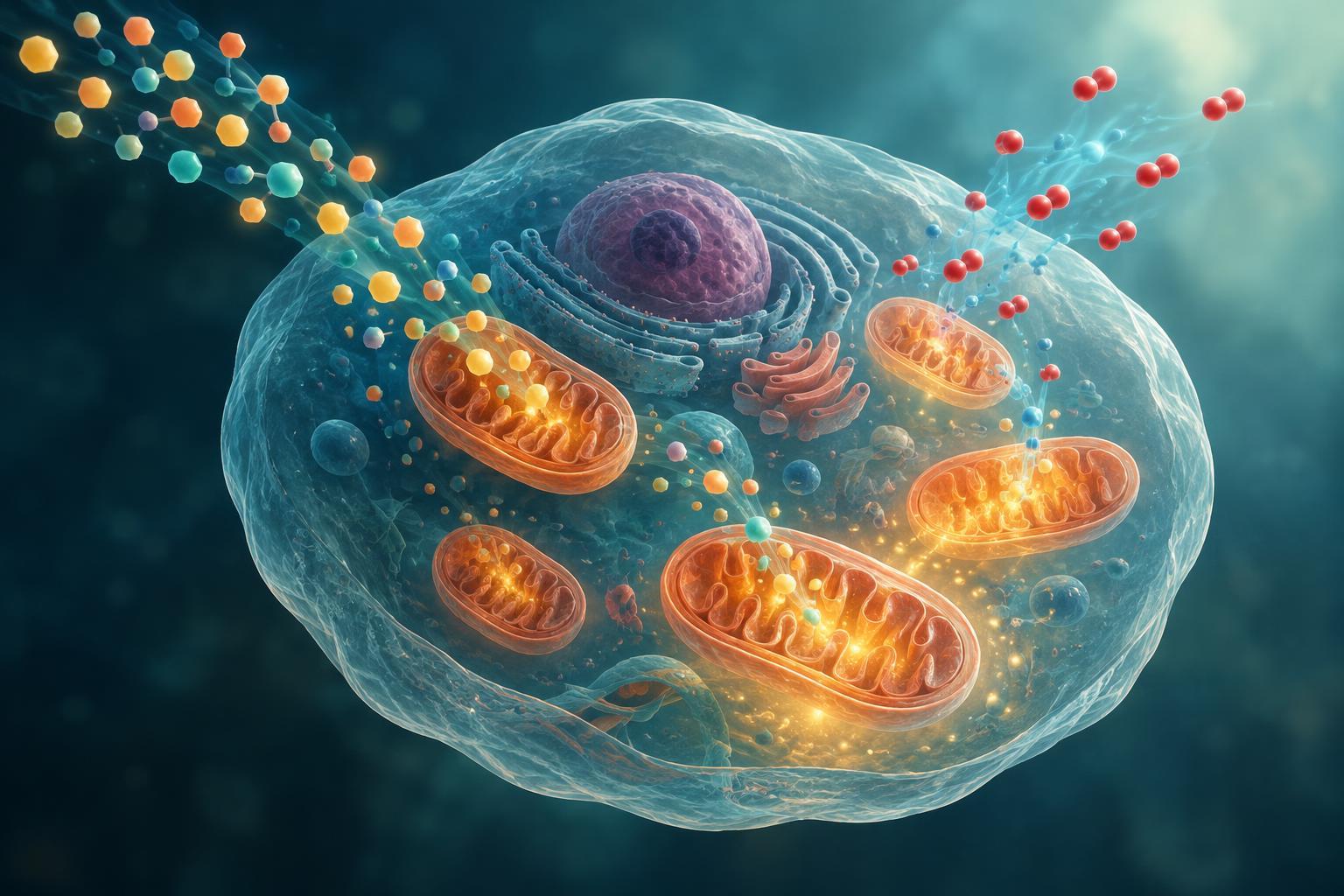
Inside a mitochondrion, pyruvate is converted into a molecule that enters the citric acid cycle. This cycle and the preceding conversion release carbon dioxide as carbon atoms from the original fuel are processed. They also load more electrons onto carrier molecules. Only a small amount of ATP is made directly at this stage; much of the captured energy is held temporarily by those electron carriers.
The carriers deliver electrons to a series of proteins in the inner mitochondrial membrane, known as the electron transport chain. As electrons pass along the chain, energy from their transfer helps move hydrogen ions across the membrane. This creates a difference in ion concentration and electrical charge between its two sides. The cell can then tap that difference, rather than using the electrons to make most of its ATP directly.
Why oxygen helps make ATP
Hydrogen ions flow back across the inner mitochondrial membrane through a protein called ATP synthase. Their movement helps the protein join the components of ATP together. A useful analogy is water flowing through a turbine, although the molecular mechanism is different. This membrane-driven process accounts for much of the ATP made during oxygen-dependent respiration.
Oxygen has a crucial role at the end of the electron transport chain: it accepts electrons and, with hydrogen ions, forms water. Without a final electron acceptor, the chain cannot keep passing electrons along. That is why a steady oxygen supply supports the continued processing of fuel in many human cells. Breathing brings oxygen into the body and removes carbon dioxide; cellular respiration refers to the chemical processes occurring inside cells.
What changes when oxygen is scarce?
Cells can still obtain some ATP from glycolysis when oxygen is unavailable, but they need a way to keep that pathway running. In human muscle cells, converting pyruvate to lactate helps regenerate a form of the electron carrier needed by glycolysis. This does not yield as much ATP from a glucose molecule as the full oxygen-dependent pathway. Different organisms have other ways of handling low-oxygen conditions; yeast, for instance, can produce ethanol and carbon dioxide.
Cellular respiration is also not limited to animals. Plants make sugars through photosynthesis, but their cells use respiration to access energy from those sugars. Across living things, the central idea is the same: food is not simply “burned” in one burst. Cells guide a series of chemical changes, capturing part of the energy for work while some is dispersed as heat.