Concrete is more than wet cement
Fresh concrete is a mixture of cement, water, and aggregates such as sand and gravel. Cement is the binding ingredient; concrete is the finished mixture. When water is added, the cement begins to react chemically. That reaction gradually creates solid products that grow through the spaces between particles and bind the aggregates together.
This process is called hydration. It explains a common surprise: concrete does not harden because its water simply evaporates. Some water becomes part of the new materials formed by hydration, while some remains in pores or eventually leaves. A concrete surface can feel dry even though important reactions are still taking place inside.
From a workable mixture to a solid
At first, fresh concrete can be placed and shaped. As hydration proceeds, it loses that workability and sets. Setting is not the same as reaching full strength: the concrete may hold its shape long before it can safely carry its intended loads. Hydration and strength development continue after the initial set, usually becoming slower over time.
The amount of water in the original mix matters. Water makes concrete workable and is needed for hydration, but adding more than the mix requires can leave extra pore space as the concrete hardens. Those pores can reduce strength and make it easier for water to move through the finished material. A mix that looks easier to pour is therefore not necessarily a better one.
Why curing protects the reaction
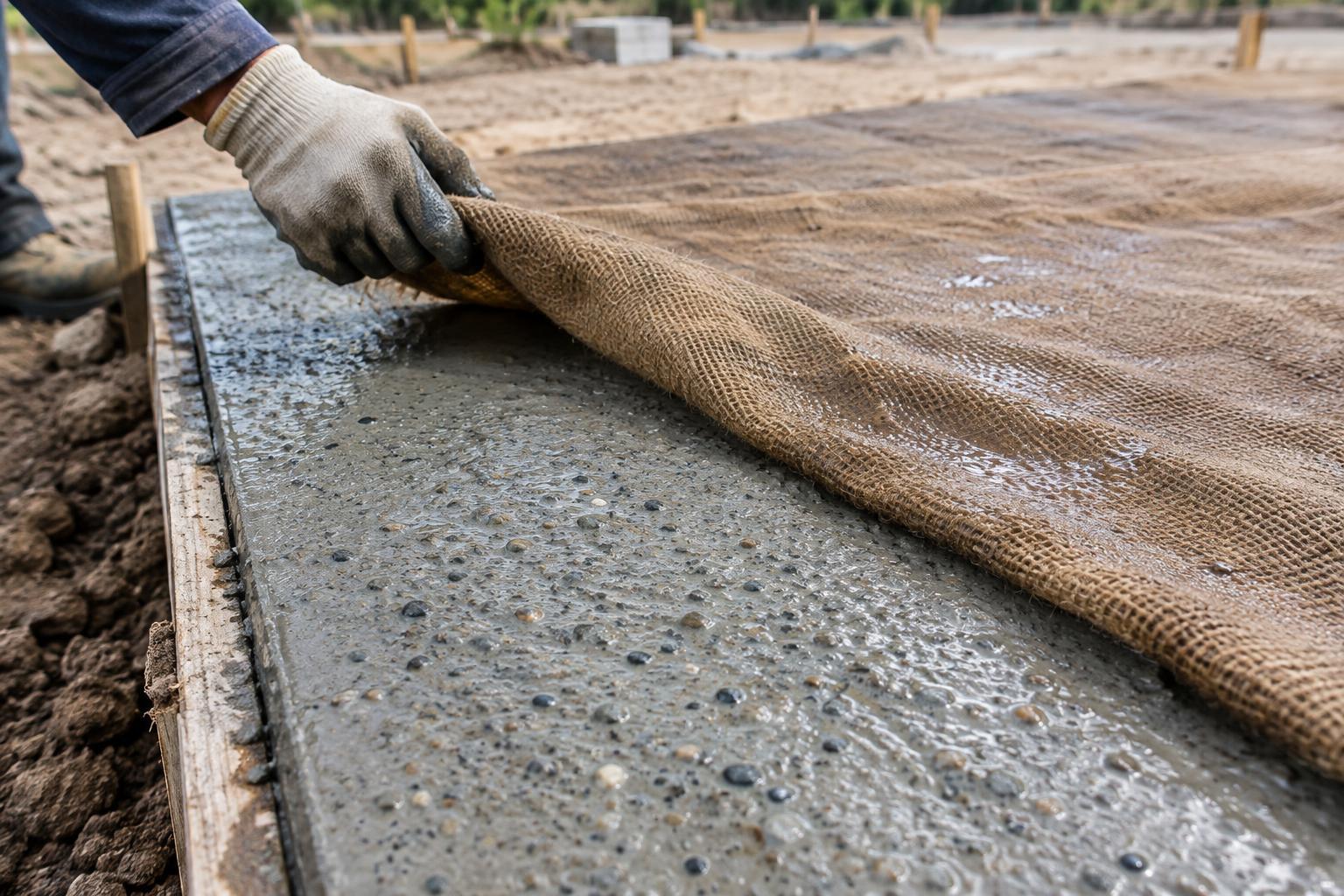
Curing means managing the concrete’s moisture and temperature after placement so hydration can continue under suitable conditions. If exposed concrete loses moisture too quickly, particularly near its surface, hydration there may slow or stop before a strong, dense structure has developed. Rapid drying can also contribute to shrinkage and surface cracking.
Temperature matters as well. Warm conditions can speed early reactions but may also increase moisture loss. Cold conditions slow hydration, and freezing can damage young concrete. The aim is not to keep concrete wet forever or to make it harden as fast as possible. It is to give the material a suitable environment while its structure develops.
Several curing approaches work by limiting evaporation, supplying moisture, or both. Depending on the project, these may include leaving forms in place, covering the surface, using damp coverings, or applying a curing compound. The appropriate method and duration depend on the mix, weather, and intended use. A newly poured sidewalk and a large structural element, for example, may face different conditions.
What poor curing can leave behind
Curing affects more than whether concrete feels hard to the touch. A poorly cured surface may be weaker or more prone to dusting and wear. If drying produces cracks or a more porous surface, water can enter more easily. Where concrete contains reinforcing steel, limiting pathways for water is one part of protecting the structure over the long term.
Not every crack signals a curing failure. Concrete can crack for several reasons, including movement, loading, and changes in temperature or moisture. Curing cannot make a flawed mix or design sound. It does, however, help the placed concrete develop the properties its mix was intended to provide.
A useful way to picture the process
Think of freshly placed concrete as a collection of stones held in a developing network of cement-based bonds. Hydration builds that network; curing gives the building process a better chance to proceed. Evaporation may make the surface look finished, but appearance alone says little about what has happened inside.
That distinction is why concrete work continues after the pour. Protecting young concrete from premature drying and unsuitable temperatures is part of making the material, not merely a final touch. Exact curing practices should follow the requirements of the mix and project, but the underlying principle is simple: concrete needs time and suitable conditions to become the durable solid we expect.