Why blood sugar needs regulation
Glucose is a simple sugar that cells can use for energy. Some comes from food, especially when the digestive system breaks down carbohydrates. The body can also release glucose from stored supplies or make it from other materials. Because the brain and other tissues need a continuing energy supply, blood glucose cannot depend entirely on when the next meal arrives.
At the same time, glucose is not meant to build up indefinitely in the bloodstream. The body continually adjusts how much enters the blood and how much leaves it. Hormones are central to that balancing act: they carry chemical messages between organs, helping coordinate responses to a meal, a long gap without food or a burst of activity.
Insulin helps handle glucose after a meal
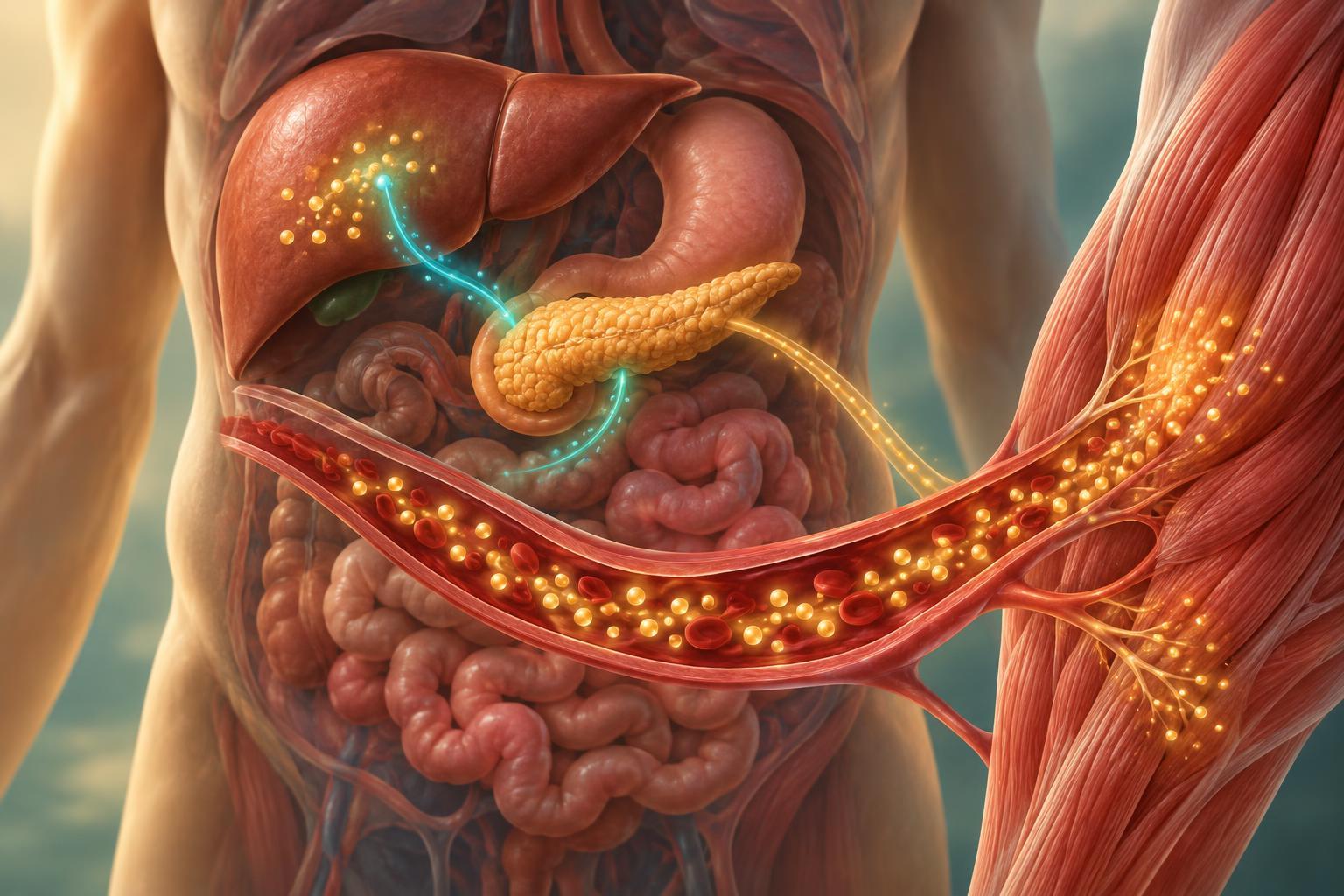
When blood glucose rises after eating, specialized beta cells in the pancreas generally release more insulin. Insulin signals muscle and fat cells to take up glucose from the blood. In muscle, some of that glucose can be used for energy or stored as glycogen, a compact form of linked glucose molecules. Insulin also encourages the liver to store glucose and reduces the liver’s release of glucose into the bloodstream.
This response helps bring blood glucose back toward its usual range. It is not an on-off switch: insulin is released at varying levels, and tissues respond according to their needs and circumstances. A rise in insulin after a meal is therefore a normal part of using and storing the energy that food provides.
Glucagon helps between meals
Hours after a meal, less glucose may be arriving from the digestive system. As blood glucose falls, pancreatic alpha cells tend to release more glucagon. Its main target is the liver, where it promotes the breakdown of glycogen and the release of glucose into the blood. Glucagon also supports the liver’s production of new glucose from other available materials.
Insulin and glucagon are often described as opposing hormones, but they work as parts of the same control system. After a meal, greater insulin activity favors taking up and storing glucose. Between meals, greater glucagon activity helps make glucose available again. The liver is especially important in this partnership because it can both store glucose and release it when needed.
Other signals change the response
Insulin and glucagon do not act alone. Hormones released by the gut when food arrives help shape the pancreas’s response to a meal. During physical or emotional stress, hormones including adrenaline and cortisol can increase the availability of fuel. Their effects differ in timing and mechanism, but they help explain why blood glucose is influenced by more than the last thing a person ate.
Movement adds another layer. Working muscles need fuel and can increase their uptake of glucose during activity. Over time, regular physical activity can also affect how readily tissues respond to insulin. The result is a flexible system rather than a fixed blood sugar setting: signals from food, the liver, muscles and other organs are being integrated throughout the day.
What happens when the system struggles
Blood sugar regulation depends both on hormone production and on cells responding to hormonal signals. In diabetes, one or both parts of that process are disrupted, though the underlying reasons differ among types of diabetes. Blood glucose may then remain higher than intended because glucose is not moved into cells or managed by the liver as effectively as it should be.
The broader lesson is that blood sugar is not controlled by a single organ or a single meal. It reflects a continuing conversation among the pancreas, liver, muscles, digestive system and other tissues. Insulin helps the body use and store incoming fuel; glucagon helps maintain a supply when food is not arriving; and other hormones adjust that balance to meet changing demands.


