Why the night sky looks different from place to place
The stars do not disappear when you travel into a city. They become harder to distinguish from the brighter sky behind them. Light from buildings, streets, vehicles and signs can spread upward or sideways. As it passes through the atmosphere, some of that light is scattered back toward the ground, creating a glow across the sky. Faint stars that stand out against a dark background can be lost against this glow.
Not all unwanted light has the same effect. A bright lamp in your line of sight produces glare, making it uncomfortable to look toward part of the sky. Light entering your eyes from a nearby window or porch can also interfere with your ability to notice dim objects. A distant town may create a broad glow near the horizon even when there are no lamps around you. These effects are often grouped together as light pollution, but noticing which one is bothering you can help you choose what to do next.
Give your eyes a better chance
Begin by finding a spot where direct lights are out of view. A wall, fence or building can block a nearby lamp, though you should choose somewhere you can stand safely and have permission to be. Turn off lights you control and avoid looking at bright screens while observing. Your eyes adjust gradually to darkness, so an object that seems invisible when you first step outside may become easier to see after you have spent some time away from bright light.
If you need to check a map or move around, use just enough light to do so safely. A dim red light can be less disruptive to dark adaptation than a bright white one, but brightness still matters: a powerful red beam can be distracting too. You can also improve your view by choosing a direction away from the strongest local skyglow. Looking higher overhead rather than low toward a lit horizon may reveal more stars.
Choose targets that suit your sky
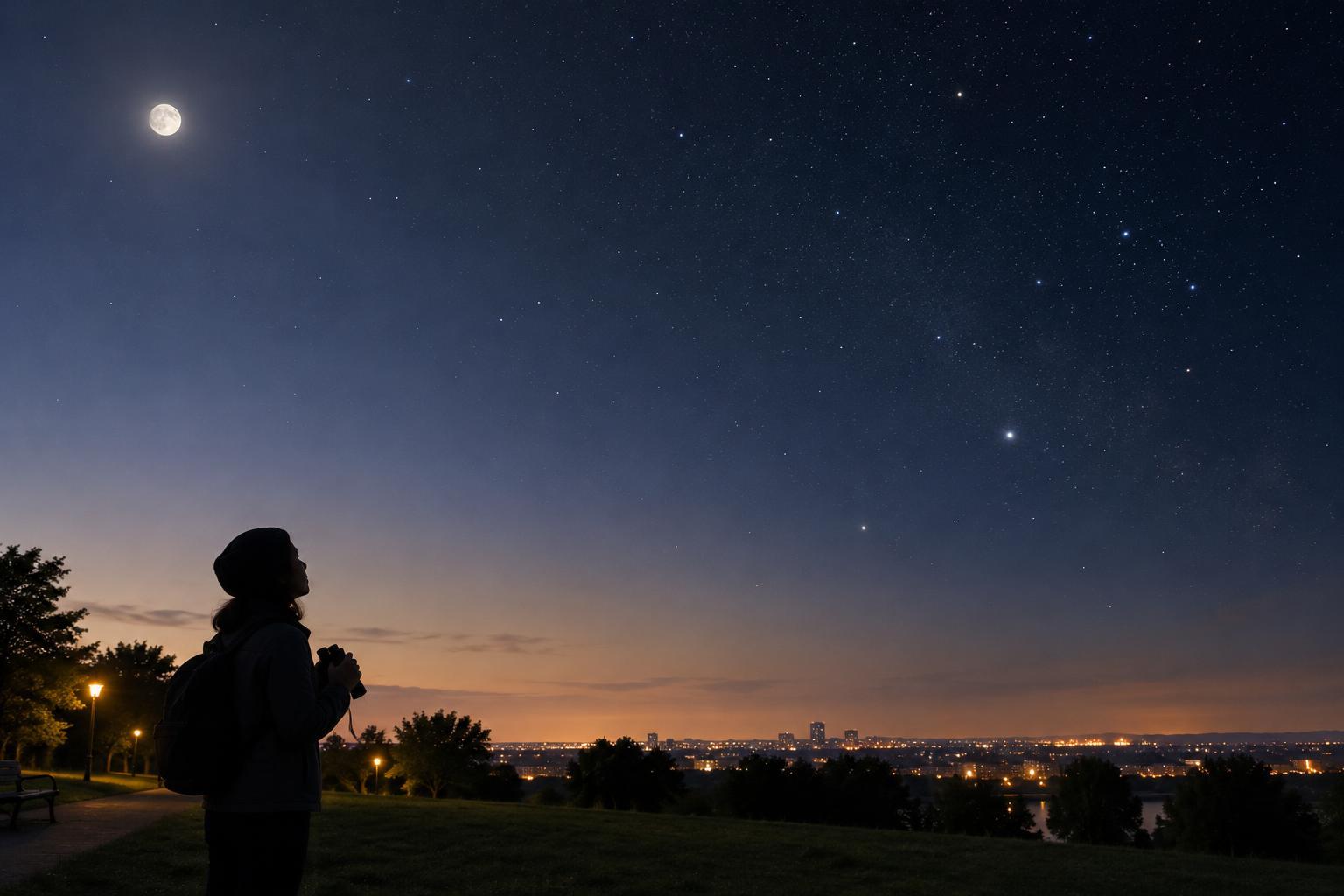
A bright sky does not rule out a rewarding first session. The Moon is an excellent starting point: its changing shape is easy to follow, and binoculars can reveal striking differences between its smoother-looking areas and more rugged terrain. Bright planets may also be visible, depending on where they are in their paths around the Sun and when you look. Watching their positions change from night to night is a useful introduction to observing rather than simply identifying objects once.
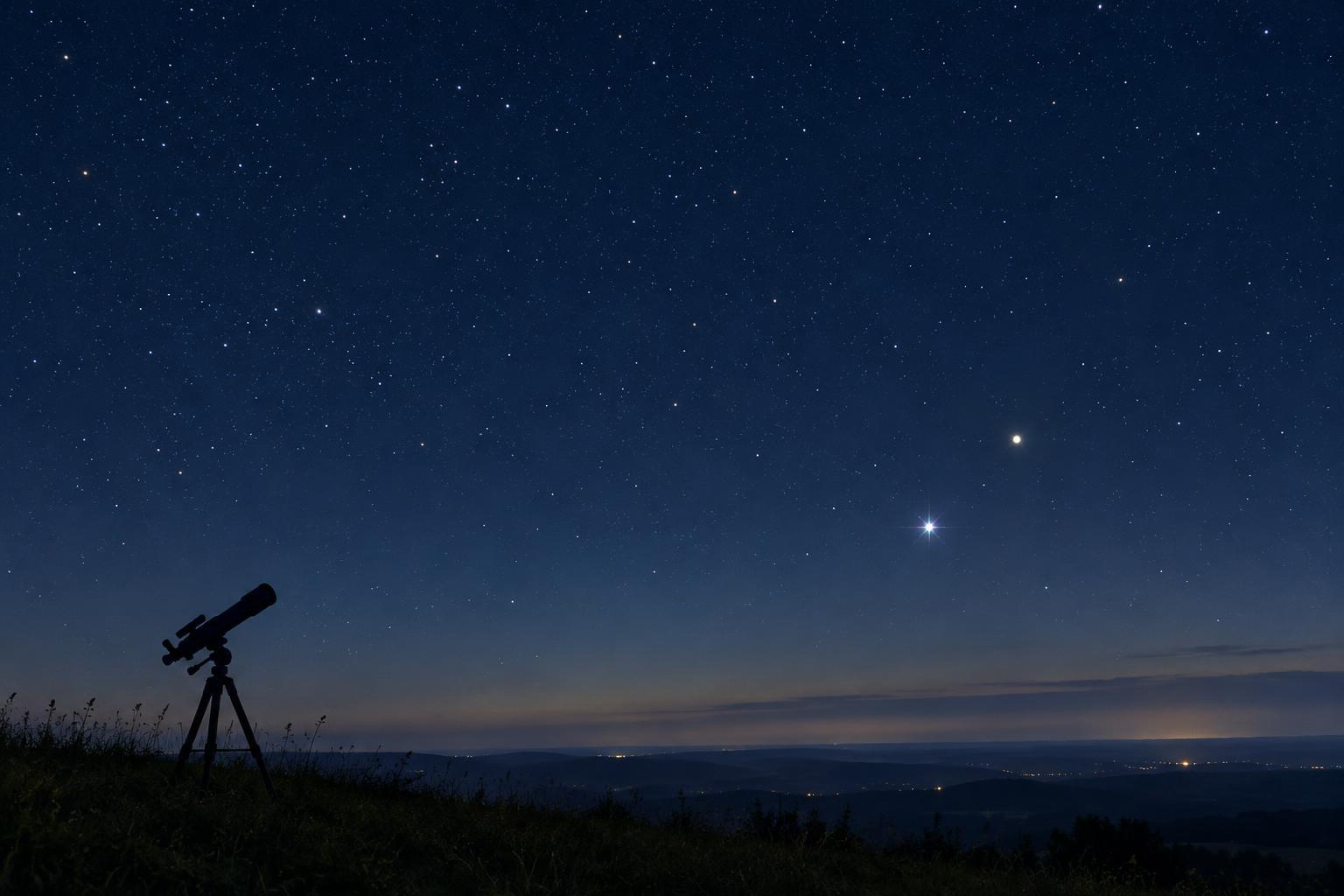
Start with the brightest stars and recognizable constellation patterns available from your location. A simple sky map can help you learn one pattern at a time. Binoculars are convenient for scanning some star groups, but they cannot restore faint objects that are overwhelmed by a bright background. Telescopes have the same limitation: magnification is not a substitute for a dark sky. If an object proves difficult, try a brighter target instead of assuming you need more equipment.
Plan around the Moon and the weather
Artificial lighting is only part of the picture. Moonlight naturally brightens the sky, especially when much of the Moon’s sunlit side faces Earth. If your goal is to find faint stars, plan for a night when the Moon is absent from the sky during your observing time, or place it outside your field of view. If you want to study the Moon itself, a partly lit Moon can be especially interesting because shadows make surface features easier to notice.
Clear conditions matter as well. Clouds block stars, while thin haze can soften their appearance and scatter light from the ground. On some nights, clouds above a brightly lit area may make the sky look unusually luminous. Checking the sky before setting up is often more useful than following a rigid observing plan. A short, comfortable session with a few visible targets can be more satisfying than a long search for objects conditions will not reveal.
Find darker views without making darkness a requirement
When you have the opportunity, compare your usual observing spot with a safe location farther from concentrated outdoor lighting. Even a modest change of position may improve the view in one direction; a substantially darker site can make many more faint stars apparent. Visit with someone if you can, know how you will get home, and bring appropriate clothing and a light for walking. Never sacrifice visibility or safety just to preserve your night vision.
You can also reduce unnecessary lighting where you live. Direct outdoor lights toward the ground, use only the brightness needed for their purpose, and switch them off when they are not needed. These choices can make nearby views more comfortable without asking anyone to navigate in the dark. Most importantly, keep observing from wherever you are. Learning the bright sky first gives you familiar landmarks—and makes a later encounter with a darker sky all the more revealing.