A breath is only the beginning
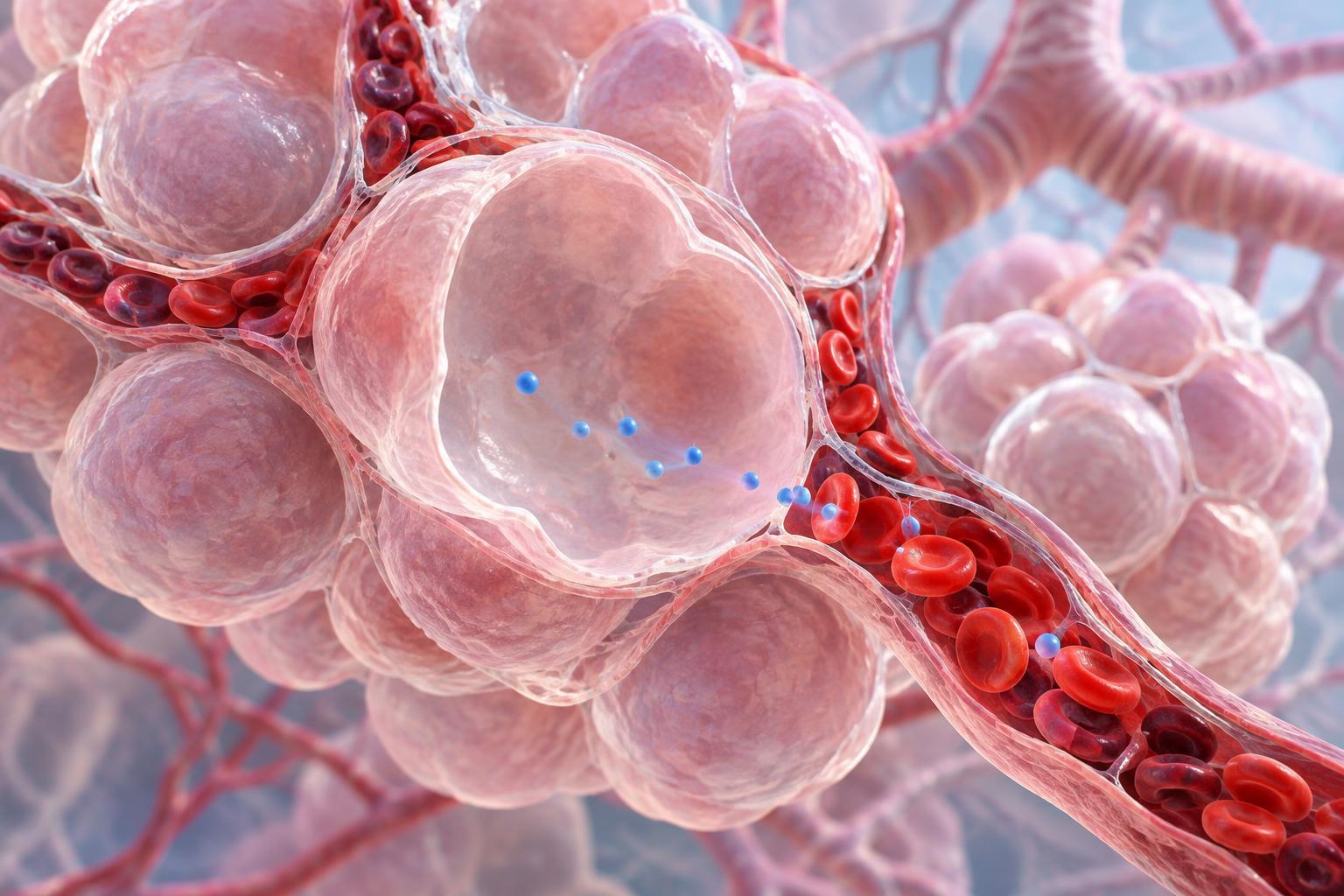
When you inhale, air travels through branching airways that end in clusters of tiny sacs called alveoli. These sacs are the main sites of gas exchange in the lungs. Their walls lie next to networks of capillaries, the smallest blood vessels. This close arrangement gives oxygen in the air a short route into the blood.
Breathing and gas exchange are related but distinct steps. Airflow refreshes the air in the alveoli. Blood flow brings in blood that has delivered much of its oxygen to the body’s tissues. Oxygen then moves from the alveoli into that blood. The lungs do not pump oxygen across the barrier one molecule at a time; the movement happens by diffusion.
Why oxygen crosses the barrier
Gas molecules move in all directions, but their net movement is from an area of higher partial pressure to one of lower partial pressure. Partial pressure describes how much of a gas contributes to the pressure of a mixture. In the lungs, oxygen generally has a higher partial pressure in the alveolar air than in the blood arriving at the capillaries. That difference drives a net movement of oxygen into the blood.
To get there, oxygen passes through a thin layer of moisture lining an alveolus, the cells of the alveolar wall, a small amount of tissue between the air sac and capillary, and the capillary wall. Together, these layers form the air–blood barrier. Its thinness makes diffusion efficient, while the many alveoli provide a large area across which exchange can occur.
Carbon dioxide makes much of the return journey: it moves from blood into the alveoli and leaves when you exhale. The two gases are not swapping places in a strict one-for-one trade. Each follows its own partial-pressure difference.
Hemoglobin carries most of the load
Once oxygen enters a capillary, a small amount dissolves in the liquid part of the blood. Most of it, however, enters red blood cells and binds to hemoglobin, a protein containing iron. Each hemoglobin molecule can hold several oxygen molecules. This greatly increases how much oxygen blood can transport compared with what could be carried in solution alone.
Binding also helps sustain the movement of oxygen from the alveoli. As hemoglobin takes up oxygen, relatively little remains freely dissolved in the blood. The difference in oxygen partial pressure between alveolar air and incoming blood can therefore continue to drive diffusion as blood passes through the capillary.
The oxygen-rich blood then travels to the heart, which pumps it through arteries to the body. In tissues where cells are using oxygen, its partial pressure is generally lower. Oxygen can leave hemoglobin, move out of the blood and diffuse toward those cells.
Why airflow and blood flow both matter
An alveolus needs a supply of fresh air, and its neighboring capillaries need a supply of blood. If either flow is limited, gas exchange in that region becomes less effective. For example, air that reaches an alveolus cannot add much oxygen to the body if little blood passes nearby. Likewise, blood flowing past an alveolus receives less oxygen if that sac is poorly ventilated.
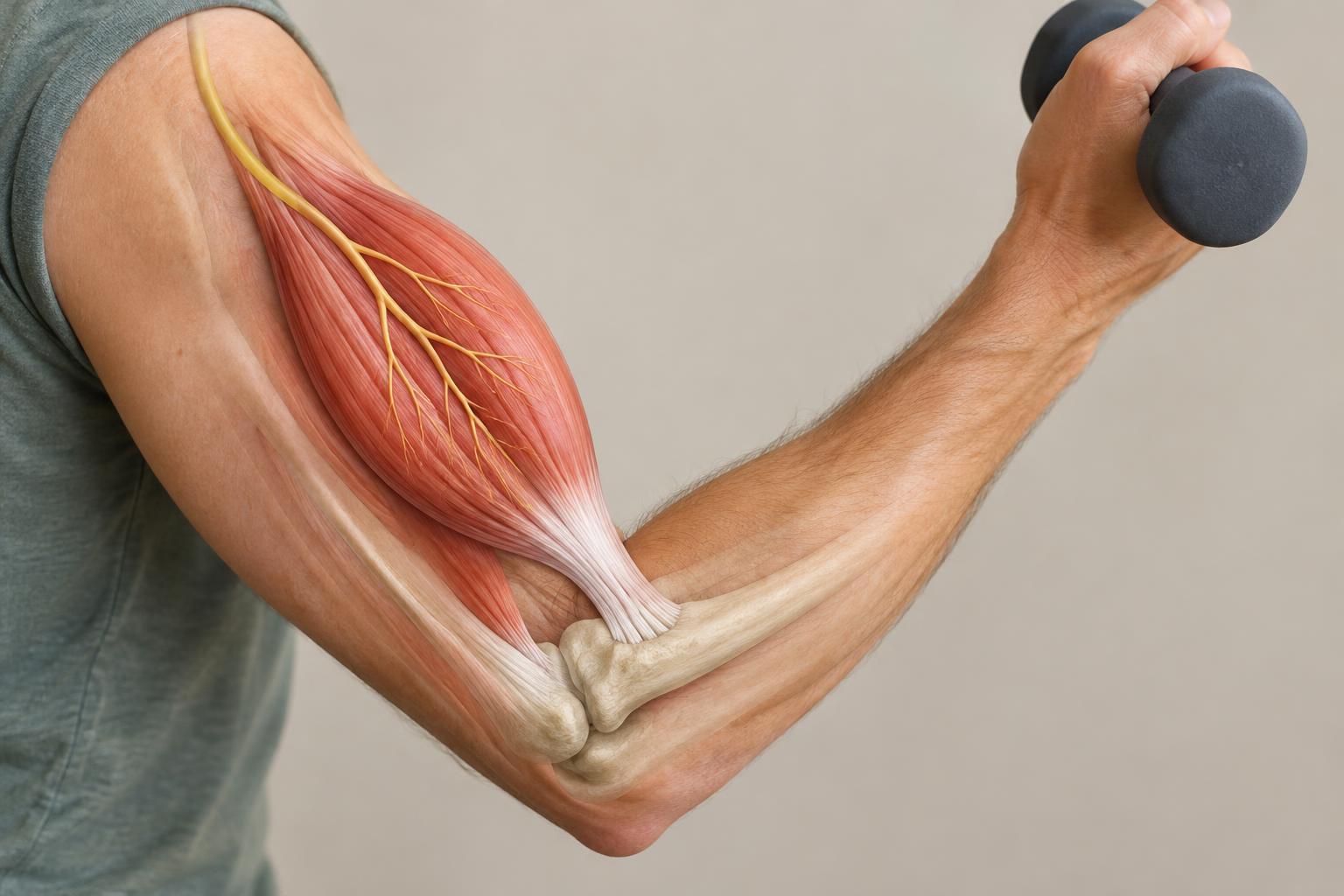
The lungs contain many regions rather than one uniform chamber. Airflow and blood flow are not perfectly identical across them, but together they usually support the body’s needs. During exercise, breathing and circulation increase to help deliver more oxygen to working muscles. The basic route across the air–blood barrier remains the same.
A useful way to picture the journey
Imagine the alveolus and capillary as two busy paths separated by a very thin fence. Breathing continually refreshes the oxygen on one side; circulation continually carries blood past the other. A difference in partial pressure gives oxygen a net direction across the fence, and hemoglobin provides room to carry it away.
That picture also shows why taking a breath is not the whole story. Oxygen delivery depends on connected steps: air reaching the alveoli, oxygen crossing into blood, hemoglobin carrying it, and circulation bringing it to tissues. The lungs provide the meeting place where the journey from the outside air into the bloodstream begins.