Waterproof and breathable describe two different jobs
A rain jacket has to resist liquid water arriving from the outside. At the same time, it should allow some of the moisture produced by your body to leave. These jobs sound contradictory, but rain and perspiration do not meet the fabric in the same form. Rain arrives as liquid drops. Moisture escaping from warm skin can move through the air as water vapor, although sweat may also remain liquid on your skin or clothing.
Many waterproof, breathable garments combine a protective membrane or coating with an outer fabric and, sometimes, an inner lining. The membrane or coating provides the main barrier to rain. The outer fabric protects it from wear, while the lining can make the garment more comfortable against clothing or skin. The whole jacket matters: water can enter through openings, damaged areas or poorly protected seams even when the fabric itself resists rain.
How a fabric can block drops but release vapor
Some membranes contain tiny, interconnected openings that allow water vapor to pass but resist the movement of liquid water. A drop does not behave like a collection of separate vapor molecules: surface tension helps hold liquid water together and makes it harder to push through very small openings. The barrier has limits, however. Enough pressure, damage or contamination can reduce its ability to keep liquid water out.
Other waterproof layers work without relying mainly on open pores. They allow individual water molecules to move into and through the material, then leave on the other side. These approaches differ in their construction, but neither is an active pump. Moisture moves more readily when conditions favor its movement from inside the garment to outside it. That is why a fabric's breathability in everyday use depends on more than the membrane alone.
Why a breathable jacket can still feel clammy
When you exercise, your body may produce moisture faster than a jacket can release it. Humid air, still air and layers that hold sweat against your skin can add to the clammy feeling. A cool inner surface may also cause water vapor inside the jacket to condense into liquid droplets. That moisture can feel like a leak even when the waterproof layer is intact.
Breathability is therefore a limit on moisture buildup, not a promise that you will stay dry inside. Opening a front zip, using underarm vents if the jacket has them, or easing your pace can let warm, moist air escape more quickly. Adjusting the layers underneath may help too. None of these changes prevents sweat, but they can make it easier for the moisture you produce to leave.
The outer fabric and seams matter
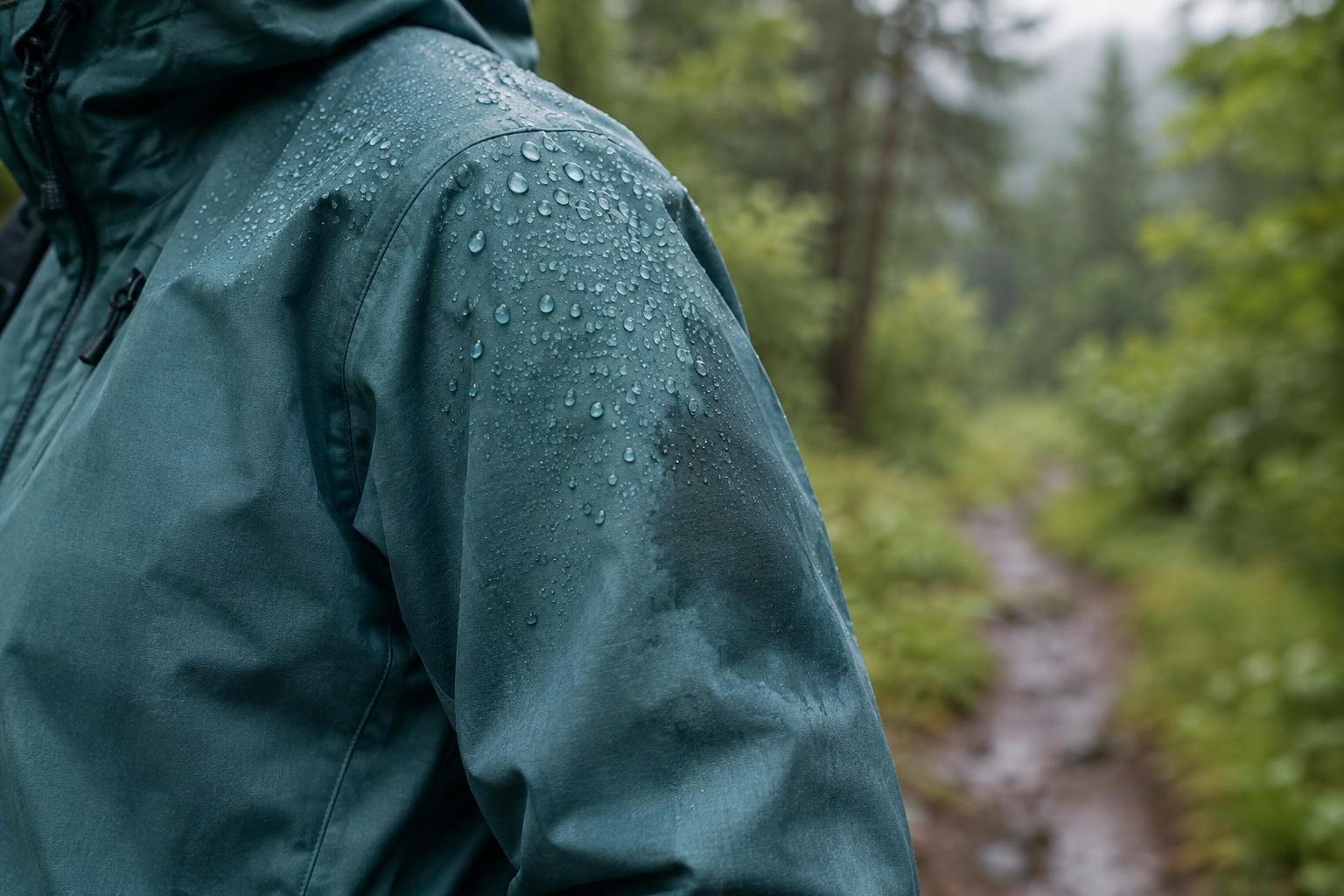
Many jackets have a durable water-repellent treatment on the outer fabric. Its job is to encourage rain to bead and roll off. It is not usually the main waterproof barrier. If the outer fabric becomes saturated—a condition often called wetting out—the jacket may feel heavier and less comfortable, and moisture may escape less readily. Wetting out does not, by itself, prove that rain has passed through the membrane.
Stitching creates holes, so waterproof garments commonly use tape or another method to protect seams. Closures, pockets, cuffs and hoods also affect how much rain reaches you. Water running down a sleeve or entering at a collar can be mistaken for failure of the fabric. When a jacket feels wet, noticing where the moisture first appears can help distinguish an opening or worn seam from condensation across a broader area.
What to expect—and how to care for it
The useful question is not whether a fabric is perfectly breathable, but whether the garment balances rain protection, comfort and durability for the way you use it. A jacket that works well during a slow walk may feel humid during a steep climb. Repeated rubbing from straps, dirt and ordinary wear can also affect performance over time. No single fabric property describes how a finished jacket will feel in every condition.
Care can preserve that balance. Follow the garment's label for washing and drying, since materials and treatments vary. Cleaning can remove buildup that interferes with performance, while a worn water-repellent finish may need refreshing according to the maker's instructions. If rain begins soaking the outer fabric, inspect its finish; if water enters at one spot, check seams and closures. These clues are more useful than assuming every damp feeling means the waterproof layer has failed.