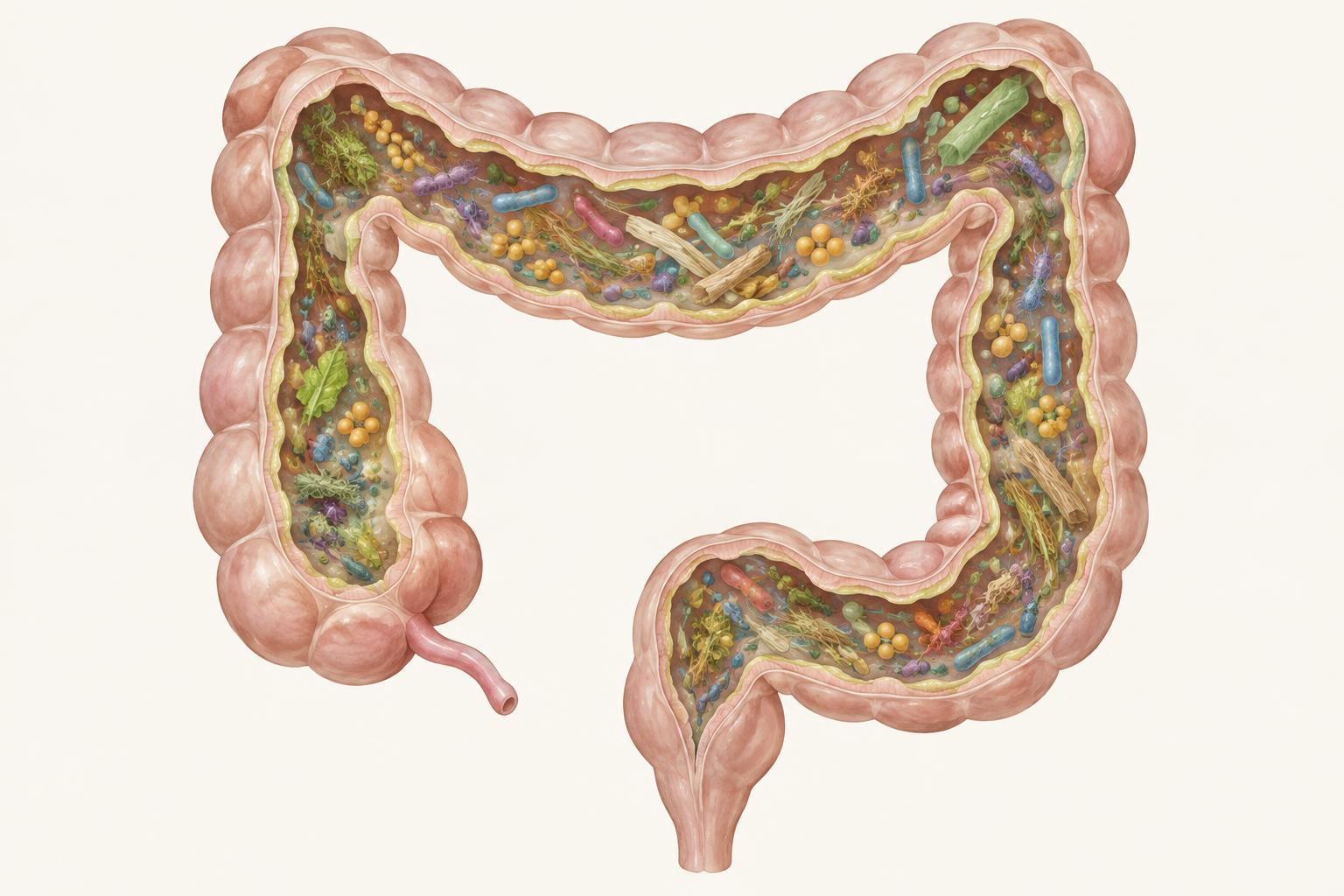
A living community, not a single organ
The gut microbiome is the collection of microorganisms living in the digestive tract, along with their genes and surrounding environment. It includes bacteria, viruses, fungi and other microscopic life. These organisms are not evenly spread from mouth to intestine: conditions such as acidity, oxygen and available food change along the way. When people discuss the gut microbiome, they are often referring mainly to microbes in the large intestine.
It is tempting to picture a fixed set of “good” and “bad” species. In reality, the community varies between people and within the same person over time. Diet, medication, illness, travel and many other factors can change what is present or active. A microbe that is harmless in one setting may be troublesome in another, while different microbes can sometimes perform similar jobs. Knowing a species’ name is therefore only a starting point.
What gut microbes actually do
Some food components pass through the small intestine without being fully digested. In the large intestine, microbes can break down parts of that material, including certain dietary fibers. This fermentation produces substances such as short-chain fatty acids, which can be used by cells in the gut and participate in the body’s wider metabolism. Microbes also transform other compounds from food and make some vitamins, although the amount the body can use depends on where and how those substances are produced.
Gut microbes interact with the intestinal lining and the immune system. They help create an environment in which incoming organisms must compete for space and nutrients. That does not make the microbiome an impenetrable shield: infections still occur, and immune responses depend on many factors beyond microbes. The useful picture is one of ongoing interaction between a microbial community, its food supply and its human host.
Why a microbial pattern is not a diagnosis
Scientists can compare samples from groups of people and find that certain microbial patterns occur more often alongside particular conditions. Such a pattern is an association, not proof that the microbes caused the condition. Illness can change appetite, digestion or medication use, which may in turn change the microbiome. Other shared factors can influence both health and microbial composition.
Even a detailed stool sample offers a limited view. It mainly reflects material leaving the gut, not every microbe attached to the intestinal lining or active at an earlier moment. Results also depend on how a sample is collected, stored, processed and analyzed. Two tests may describe the same community differently, and the presence of a microbial gene does not show how strongly that gene is being used. There is no single species list that defines a healthy gut for everyone.
What to make of microbiome tests and claims
A consumer microbiome report may describe which organisms were detected and how its sample compares with others in a reference group. That can be interesting, but a comparison is not the same as a clinical interpretation. A label such as “low diversity” needs context: diversity can be measured in different ways, and more of it is not automatically better in every circumstance.
Be cautious when a product or report jumps from a broad microbial finding to a precise recommendation for your symptoms, ideal diet or future disease risk. To support that leap, it would need reliable evidence that the measurement predicts a meaningful outcome and that acting on the result helps. Probiotics pose a similar interpretation problem: different strains and preparations are not interchangeable, and a benefit shown for one purpose should not be assumed for every other purpose.
A useful everyday perspective
The microbiome responds to its environment, so everyday habits can matter without offering a guaranteed way to engineer a particular result. Eating a variety of plant foods, when they suit your needs, supplies different fibers and other compounds for gut microbes to use. Avoiding unnecessary disruption, such as taking antibiotics without a clear reason, also makes sense; when antibiotics are needed, their benefits can outweigh their effects on gut microbes.
The most useful question is often not “Which microbe should I have?” but “What can this measurement actually tell me?” Gut microbes perform important work, yet they are one part of a larger digestive and immune system. If persistent symptoms are the concern, a microbiome score alone cannot identify their cause. Understanding its limits makes the science more useful, not less: it lets an intriguing result remain a clue rather than become an unsupported verdict about health.


