Heat resistance and toughness are different properties
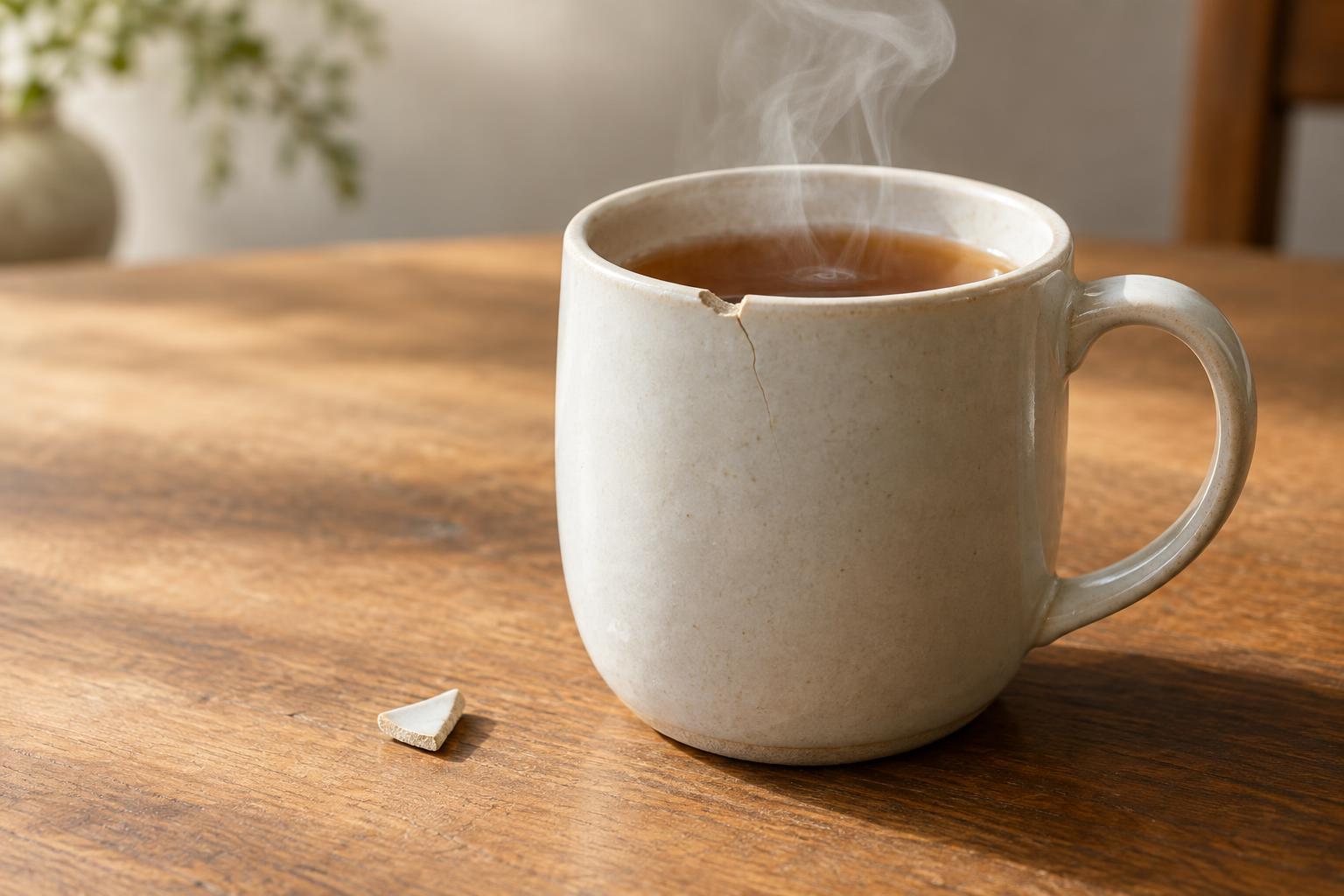
A ceramic mug seems built for heat. It holds boiling water without melting or losing its shape. Drop that same mug onto a hard floor, however, and it may break into pieces. There is no contradiction: resisting heat and resisting cracks are different jobs. The structure that helps many ceramics remain stable at high temperatures does not necessarily help them survive an impact.
Ceramics are a broad family of mostly inorganic, nonmetallic materials. They include pottery, porcelain, bricks and specialized materials used in machinery. Their properties vary considerably. Some are valued for insulation, others for hardness or electrical behavior. The familiar combination of heat resistance and brittleness is common, but it is not a rule that applies equally to every ceramic.
What heat does to a material
As a material gets hotter, its atoms move more vigorously. In many ceramics, strong bonds between atoms help the solid retain its structure as temperature rises. A kitchen mug can therefore remain rigid at temperatures that would soften some plastics. Specialized ceramics can operate at much higher temperatures than household pottery, although the useful temperature range depends on the material and its surroundings.
Heat resistance also has more than one meaning. A material might withstand a high temperature while conducting heat readily, or it might slow the movement of heat while having a lower temperature limit. A ceramic oven dish and a ceramic component inside a machine need not perform the same way. Asking whether something is “heat resistant” is most useful when we also ask: resistant to how much heat, for how long, and under what conditions?
Why a hard surface can still be brittle
Hardness describes resistance to local scratching or indentation. Toughness describes how well a material resists the growth of a crack. Many ceramics are hard but not especially tough. When a metal object is bent, parts of its internal structure can often shift, allowing it to change shape and absorb energy before it breaks. In many ceramics, that kind of permanent reshaping is much more limited at ordinary temperatures.
This matters because real objects are never perfectly smooth or flawless. A tiny pore, scratch or chip can concentrate stress at its tip. Under a strong enough pull or impact, a crack can begin there and spread rapidly. Ceramics generally withstand squeezing better than pulling, so even a blow that appears to press on an object can break it if the object bends and puts one side under tension. A chipped mug rim is vulnerable partly because it already contains an irregular edge where stress can gather.
Why sudden temperature changes cause cracks
Heating usually makes a material expand; cooling makes it contract. If every part changes temperature together, the material may expand or shrink without much difficulty. Trouble begins when one region changes temperature faster than another. Pouring hot liquid into a cold ceramic vessel, for example, warms its inner surface before its outer surface has caught up. The two regions then try to change size by different amounts, creating internal stress.
This is called thermal shock. Whether it causes a crack depends on several properties, including how much the ceramic expands with temperature, how quickly heat moves through it, and how much stress it can tolerate. Shape, thickness and existing flaws matter too. Being able to withstand a high, steady temperature does not guarantee that an object can withstand a rapid temperature change.
Designing ceramics for the job
Engineers can improve a ceramic’s performance by controlling its ingredients, processing and shape. Reducing pores and other defects removes some places where cracks might start. In some specialized ceramics, a carefully chosen internal structure can slow or resist crack growth. Designers may also avoid sharp corners, which concentrate stress, or choose a material that expands relatively little when heated and cooled.
These choices involve trade-offs. A material suited to repeated temperature swings may differ from one chosen for maximum hardness, electrical insulation or resistance to wear. That is why “ceramic” alone does not tell us whether an object is safe for a particular oven, flame or sudden change in temperature; its design and intended use matter. The mug that survives a hot drink but breaks on a tile floor is a useful reminder that materials face different kinds of stress, and strength in one situation does not promise strength in another.