A rotating planet in sunlight
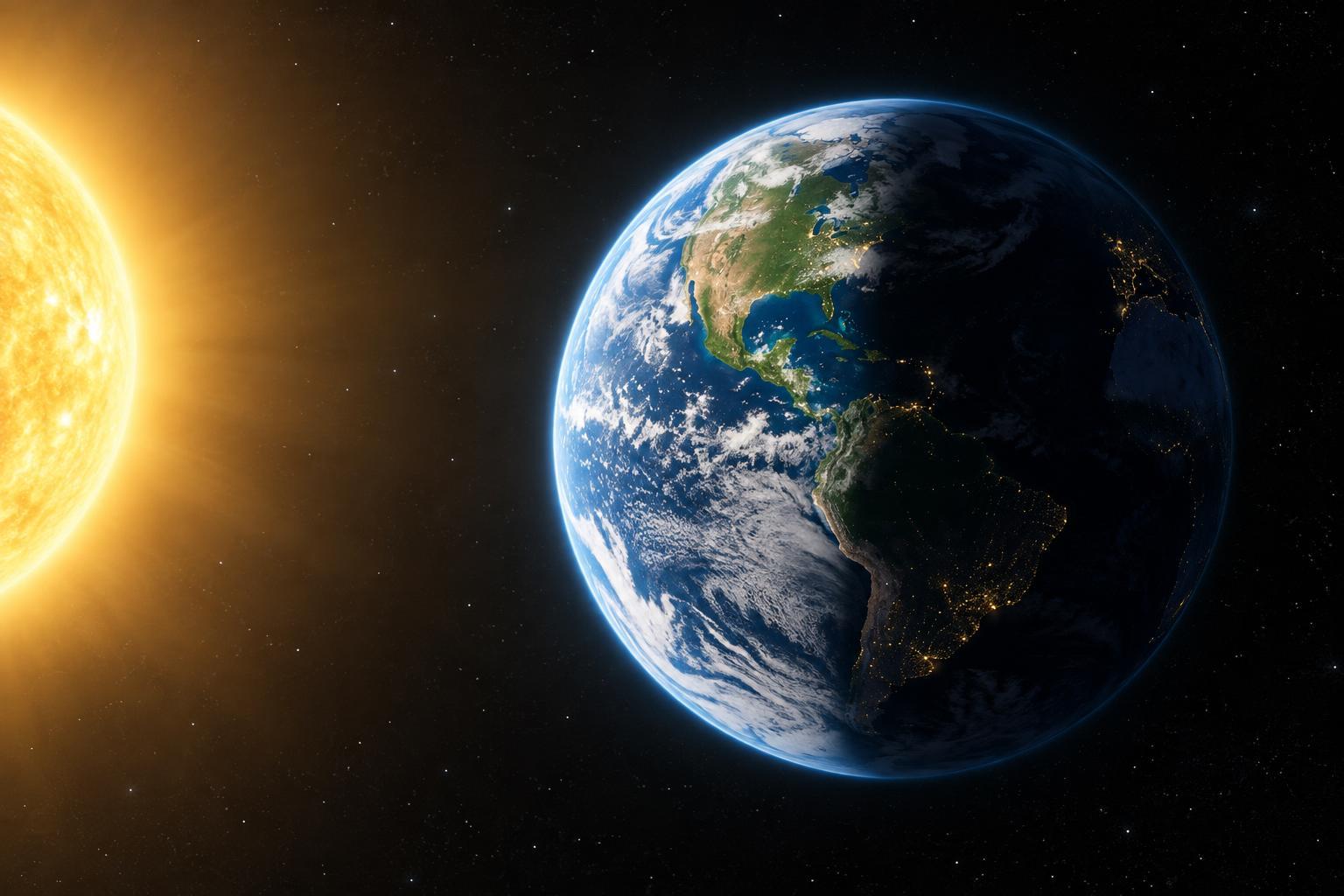
At any moment, sunlight illuminates roughly half of Earth. The other half faces away from the Sun. Earth’s rotation carries each place through these sunlit and dark regions, producing the familiar cycle of day and night. If you could watch Earth from far away, you would see a slowly turning globe with a boundary between light and darkness moving across its surface.
Earth spins around an imaginary line called its axis, which passes through the North and South Poles. Viewed from above the North Pole, that spin is counterclockwise. Most places on Earth therefore move from darkness into sunlight, spend part of the rotation in daylight, and then return to darkness. The Sun does not need to travel around Earth each day for this to happen: the changing view comes mainly from our own planet’s motion.
Why the Sun seems to move across the sky
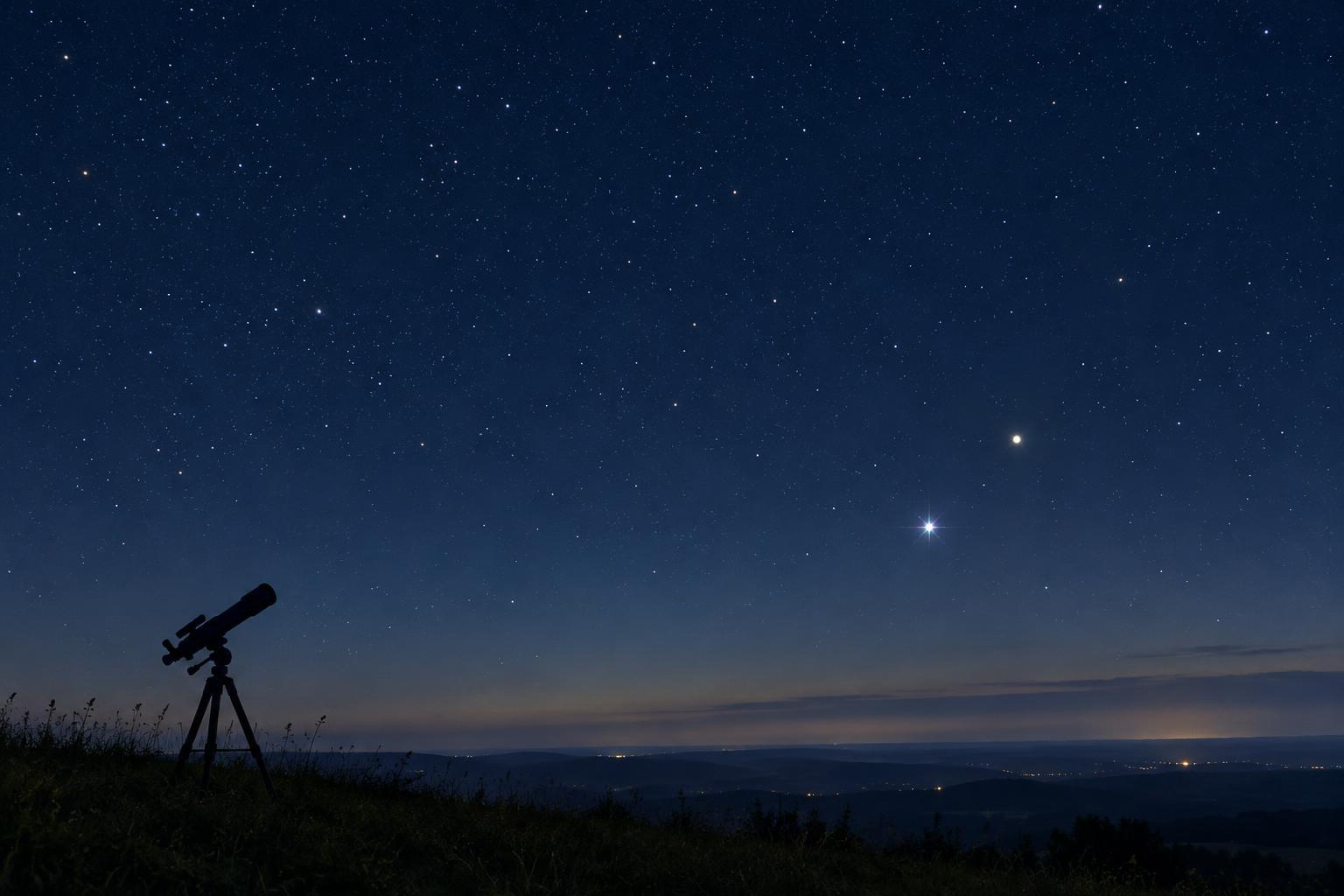
As Earth turns, the direction you face relative to the Sun changes. Near sunrise, the Sun appears close to the eastern horizon. Later, it appears higher in the sky; by sunset, it is near the western horizon. This apparent journey is much like the way stationary objects can seem to move past you when you turn around. Your viewpoint is changing, even though you may feel still.
A full spin relative to distant stars takes Earth a little less than 24 hours. But Earth also travels along its orbit around the Sun. After one spin, it must turn a little farther for the Sun to return to approximately the same place in the sky. That is why the familiar solar day is about 24 hours. Local noon, when the Sun reaches its highest point for the day, provides one way to picture this cycle.
The boundary between day and night
The dividing region between Earth’s lit and unlit sides is often called the terminator. As your location rotates across it in the morning, you experience sunrise; crossing it again in the evening brings sunset. This boundary is not perfectly sharp to an observer on the ground. Earth’s atmosphere scatters sunlight, creating twilight before sunrise and after sunset, when the Sun is below the horizon but the sky is not yet fully dark.
The atmosphere also bends incoming light slightly. As a result, the Sun can appear just above the horizon when it is geometrically a little below it. Hills, buildings and your height above the ground can also affect when you first or last see the Sun. These details change the observed times of sunrise and sunset, but not the basic cause of day and night: Earth’s rotation.
Why daylight hours change through the year
If rotation creates day and night, why are some days longer than others? Earth’s axis is tilted relative to the plane of its orbit around the Sun. As Earth moves around that orbit, each hemisphere takes turns leaning toward the Sun. When your hemisphere leans toward it, the Sun generally follows a longer, higher path across the sky, giving many locations more hours of daylight. When your hemisphere leans away, its path is shorter and lower.
The difference depends on latitude. Near the equator, day and night stay fairly close in length throughout the year. Farther from the equator, the seasonal changes become more pronounced. Near the poles, the Sun can remain above the horizon for an extended period in summer and below it for an extended period in winter. These extremes still follow the same geometry of a rotating, tilted Earth receiving sunlight.
An everyday way to picture it
Imagine a lamp shining on a globe in a dim room. Keep the lamp in one place and slowly turn the globe: any marked spot alternates between light and shadow. Tilt the globe while you do this, and notice how the time that spot spends in the light can change depending on where it lies. The model simplifies the real Earth–Sun system, but it captures the main ideas behind both the daily cycle and seasonal changes in daylight.
It also helps clear up a common misconception: night is not caused by the Moon blocking the Sun. The Moon may be visible in daylight or at night, depending on where it is in its orbit. Ordinary nighttime occurs because your part of Earth has turned away from direct sunlight. Each morning, continued rotation brings it back into view of the Sun.