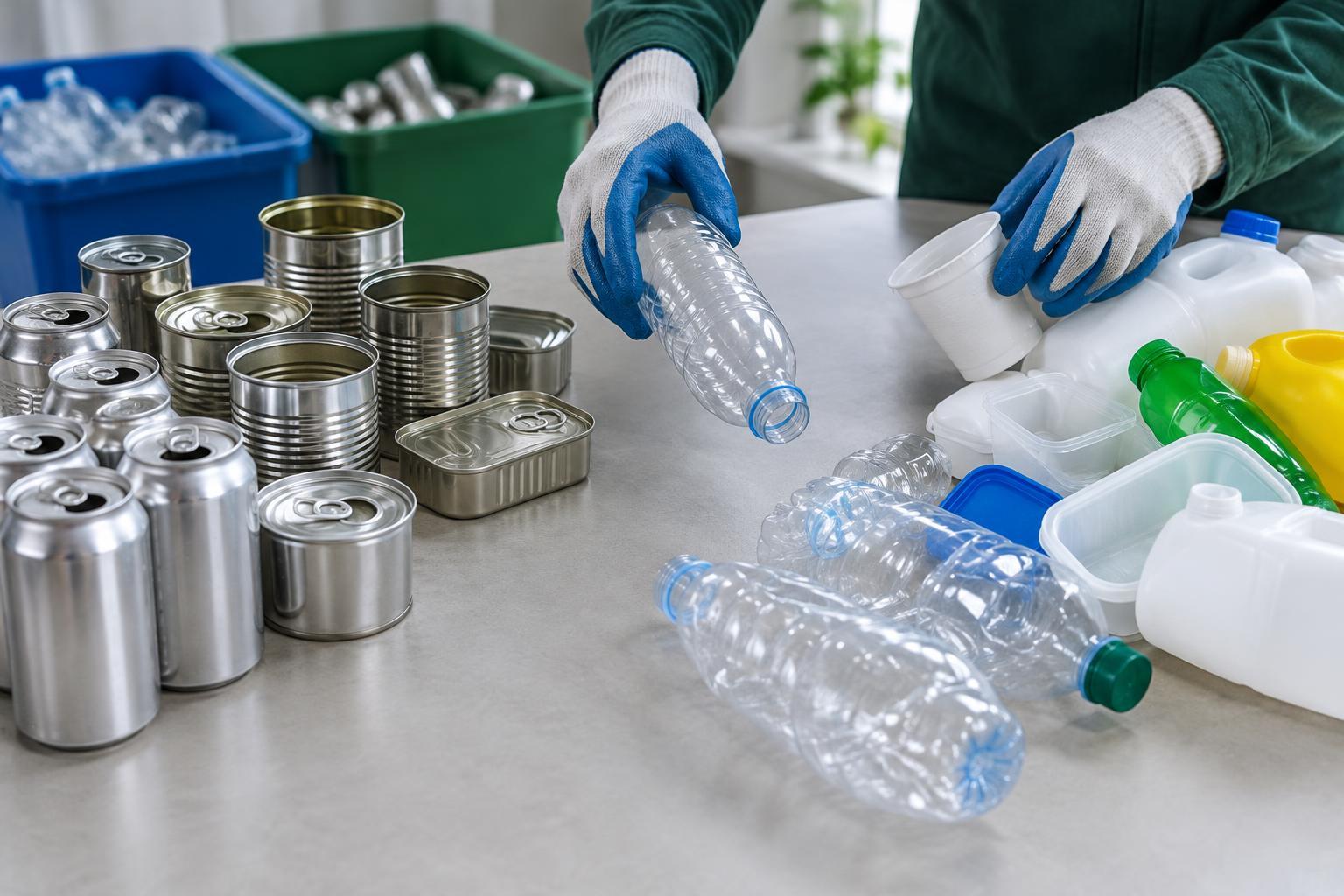
Recycling starts with a material, not a bin
Putting an item in a recycling bin does not turn it into raw material. Before it can be used again, it usually has to be collected, separated, cleaned and processed into a form a manufacturer can work with. Sorting matters because a maker of aluminum sheet, for example, needs a more consistent input than a mixture of cans, plastic trays and food scraps.
Even items that look alike may behave differently when heated or formed. A clear plastic bottle and a clear plastic food container might be made from different polymers. A steel can and an aluminum can are both metals, but they belong in different processing streams. The closer a sorted batch comes to the material a manufacturer needs, the easier it is to make a useful new product from it.
Why metals need separating
Metals can often be melted and shaped again, but mixing them is not always harmless. Steel is primarily iron, while aluminum is a different metal with a much lower melting point. Both can be valuable scrap, yet they require different processing. Within each broad group, alloys contain different combinations of elements chosen for particular properties. An unwanted alloy mixed into a batch can make it harder to meet the requirements of a new product.
Recycling facilities use physical properties to help separate metals. Magnets can pull many iron-containing items away from other materials. Machines called eddy-current separators can push certain nonmagnetic metals, including aluminum, away from a moving stream. These methods are useful, but they do not identify every alloy or remove every attachment. A can with food still inside, or an item made from several joined materials, adds another task before its metal can be recovered.
Why plastics are especially sensitive to mixing
Plastic is not one material. Different polymers have different melting behavior, strength and uses. Many familiar plastics are softened by heat and made into new shapes, but a mixture of incompatible polymers may not blend evenly. Instead, it can produce weak spots or inconsistent material. Colorants, labels, adhesives and leftover contents can also affect the quality of the recycled plastic.
Sorting systems may use an item’s shape, density or response to light to help identify its material. Some facilities use optical equipment to separate common plastic types. No single method solves every problem: dark colors, sleeves covering a container, or multiple bonded layers may complicate identification. The number inside a triangle on a plastic item identifies a resin category; it is not a promise that the item is accepted in your local collection program or that it will be recycled.
Contamination has more than one form
A non-recyclable item in a collection stream is an obvious sorting problem, but contamination can be less visible. Food or liquid left in containers can soil other materials and make cleaning more difficult. Small pieces, such as loose caps, may behave differently from full-size containers as they move through sorting equipment. An object made from plastic and metal may need to be taken apart—or may not be suitable for a particular program at all.
These challenges do not mean every item must be spotless or that recycling is pointless. They mean the rules for what belongs in a bin depend partly on the equipment and buyers available to the local program. An item accepted in one place may be excluded in another. Putting a questionable item in the bin “just in case” can create extra sorting work rather than giving it a better chance of being recycled.
Small habits that help sorting work
Start with the guidance for your own collection program, especially for plastic tubs, films, lids, foil and unusual metal objects. Empty containers and remove leftover food as directed locally; a quick rinse may be enough where rinsing is requested. Keep items loose if the program requires it, since a bag of mixed recyclables can hide its contents from sorting equipment. Do not assume that every item bearing a recycling symbol belongs in a household bin.
The most useful question is not simply “Can this material be recycled?” but “Can this item be collected and sorted into a stream someone can use?” Sorting preserves the properties that make recovered metals and plastics valuable. It is the step that connects an everyday act—finishing a drink or unpacking groceries—to the more demanding work of making a reliable new material.


