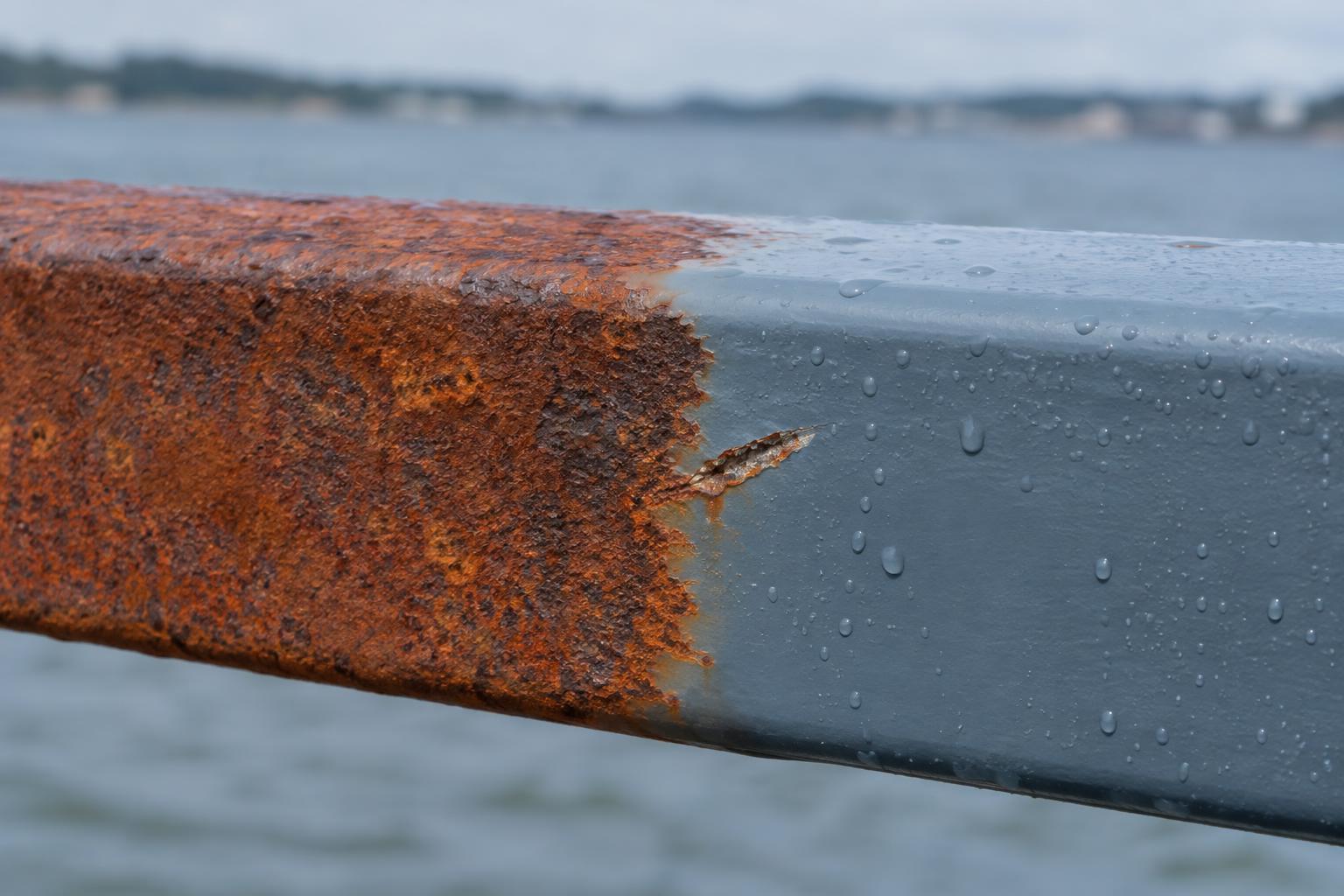
Rust begins at the surface
Steel is used in bridges, tools, appliances and countless other objects because it is strong and can be shaped into useful forms. Most ordinary steel is largely iron. When its surface is exposed to both water and oxygen, some iron atoms can lose electrons and enter the moisture as dissolved iron ions. Other reactions use those electrons and oxygen. The resulting iron compounds can eventually become the reddish-brown material we call rust.
Rust is not simply a stain sitting on otherwise unchanged metal. Its formation consumes iron from the steel beneath it. Unlike some tightly adhering surface layers that protect a metal, ordinary rust is often porous and flaky. Water and oxygen can reach the steel below, so corrosion may continue after the first patch appears.
Why a small scratch can matter
A steel surface is rarely perfectly uniform. Its composition, exposure to air and contact with moisture may vary from one tiny area to another. These differences can create local sites where iron dissolves more readily. A scratch in a protective finish gives moisture a direct route to bare steel and may become a starting point for corrosion.
Salt often makes the problem worse. When dissolved in water, it helps the moisture conduct electrical charge, supporting the reactions involved in corrosion. Salty spray and road salt can also linger in seams and crevices where surfaces dry slowly. Even without salt, repeated wetting, trapped water and poor drainage give rust more opportunity to develop. Dry steel generally rusts much more slowly because the thin film of water needed for the reactions is absent.
Coatings put a barrier in the way
Many protective coatings work by separating steel from water and oxygen. Paint, powder coatings and other finishes can form a continuous layer over the surface. Their effectiveness depends not only on the coating material but also on whether it covers edges, joints and hard-to-reach areas. A coating with gaps cannot provide the same protection as an intact one.
Surface preparation is equally important. Loose rust, dirt, grease or moisture can prevent a coating from bonding well. Cleaning the steel and using a suitable primer can help the finish adhere and stay continuous. If rust is already present, merely painting over loose flakes may hide the problem for a while without stopping moisture from reaching the metal.
Why zinc protects differently
Galvanizing covers steel with zinc. The zinc layer acts as a physical barrier, but it has another useful property: when zinc and exposed steel are connected in the presence of moisture, zinc tends to corrode in preference to iron. This is called sacrificial protection. It can help protect a small exposed area if the coating is scratched.
That protection is not unlimited. Zinc is gradually consumed, and the lifetime of a galvanized surface depends on its coating thickness and environment. Some products combine zinc with paint or another finish: the outer layer limits exposure, while the zinc offers an additional line of defense where minor damage occurs.
Choosing protection for the conditions
No coating makes ordinary steel permanently immune to rust. A sheltered indoor object, a garden gate and a component regularly exposed to salt water face different demands. The right approach depends on how often the steel gets wet, whether it can dry, how easily it can be inspected and what kind of wear the surface must withstand.
Design and upkeep matter alongside material choice. Allowing water to drain, avoiding places where damp debris collects and repairing damaged finishes can reduce the time bare steel stays wet. Stainless steel offers another approach: enough chromium in the alloy allows a thin, protective surface layer to form. It can resist rust far better than ordinary steel in many settings, though it is not corrosion-proof under every condition. Across these methods, the principle is the same: keep the reactions that consume iron from gaining a foothold.


